

Key Takeaways
Why planning comes before shopping
Most budget overruns at the grocery store happen before a single item is picked up. Without a written plan, shoppers fill the cart based on what looks good rather than what meals actually require. The result is overlap, gaps, and waste. A $75 run only works when you know precisely which seven dinners, five lunches, and fourteen breakfasts the cart must cover.
Start by writing out every meal for the week on paper or in a notes app. Be specific: not "pasta night" but "whole wheat spaghetti with lentil tomato sauce." Once each meal is listed, extract the ingredients and cross out anything already in your pantry. What remains is your actual shopping list. This process typically cuts 15 to 20 items from a cart because it exposes duplication and unnecessary extras.
For a broader look at how nutrition and affordability work together, see our practical budget eating overview. And if you want to understand which spending habits silently drain grocery budgets, the common mistakes that hurt health-conscious families article is worth reading before your next trip.
What you will need
How to build the $75 shopping list
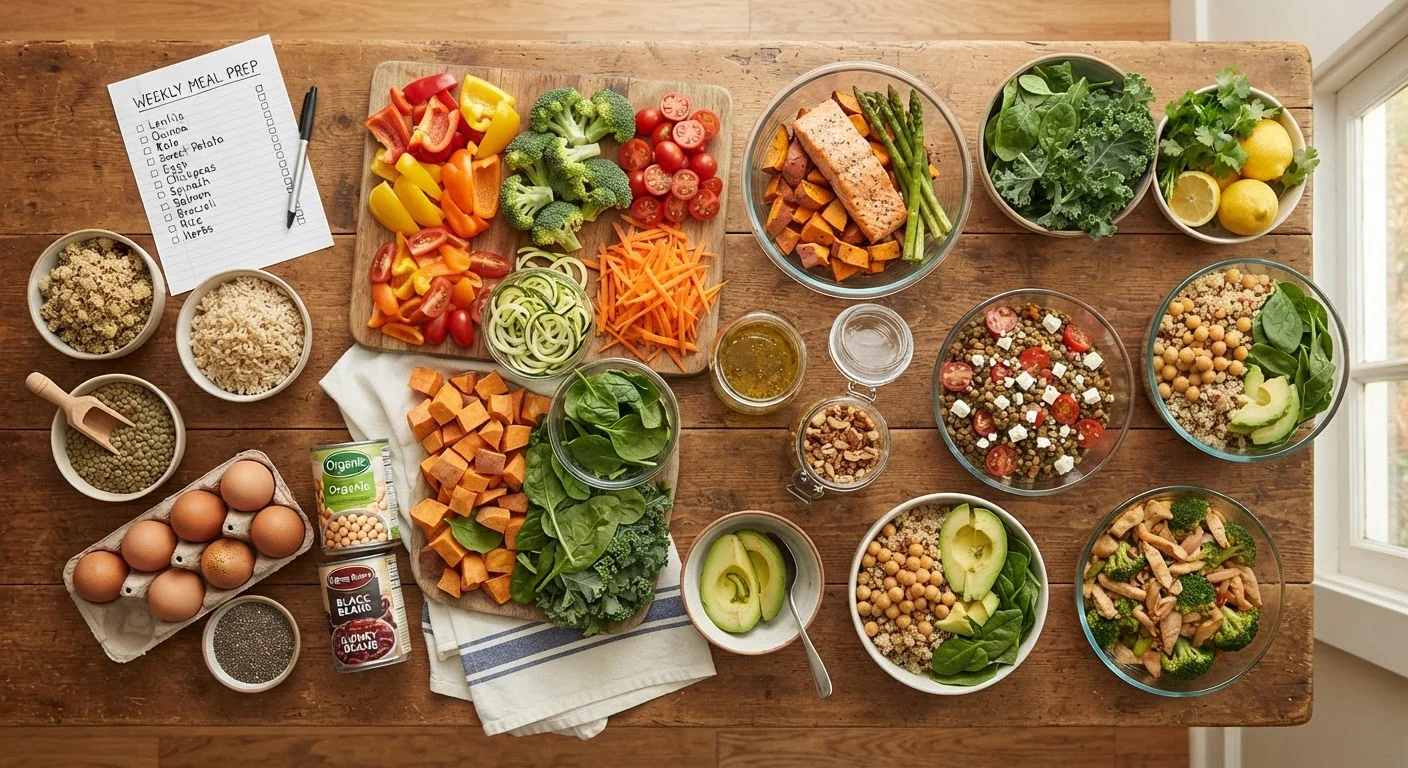
A balanced week of meals needs protein, complex carbohydrates, healthy fats, and plenty of vegetables. The goal is to choose ingredients that appear in more than one meal, so nothing goes to waste.
Allocate roughly $20 to $25 toward produce. Seasonal vegetables cost less and deliver solid nutrition, so check what is currently in season in your region before writing the list. Our seasonal produce calendar shows what tends to be affordable each month across U.S. regions. Aim for two to three vegetables that can be roasted, stir-fried, or added to soups interchangeably.
Spend $20 to $25 on protein. Eggs, canned beans, lentils, and tofu cover most of the week at a fraction of the cost of meat. A dozen eggs alone can anchor four to five meals. Our guide to affordable plant-based protein covers the most practical options in detail. If your family eats meat, one modest cut of chicken thighs or ground turkey can stretch across two or three dinners.
The remaining $25 to $30 goes to pantry staples: brown rice, rolled oats, whole wheat pasta, canned tomatoes, olive oil, and dried spices. Many of these last beyond the week, which means the effective per-meal cost drops further. For more on using these staples effectively, see our article on stretching pantry staples into nutritious meals.
Meal planning notepad or app
Used to map out all seven days of meals before writing the shopping list.
Reusable shopping bags
Keeps produce and groceries organized by category during and after shopping.
Large pot and sheet pan
Used for batch-cooking grains, beans, and roasted vegetables at the start of the week.
Airtight food storage containers
Keeps prepped grains, beans, and vegetables fresh in the refrigerator for up to four days.
Step-by-step: from list to seven days of meals
With the list ready and the groceries home, the following steps turn raw ingredients into a structured week of eating. The approach works for families of two to four; adjust quantities as needed.
Audit your pantry before leaving the house
Open every cabinet and check the refrigerator. List what you already have: oils, grains, canned goods, condiments, and spices. Anything usable this week comes off the shopping list. This single step commonly saves $10 to $15 per trip.
Map each ingredient to at least two meals
Before finalizing the list, write the meal name next to each ingredient. If an ingredient only appears once, either add a second meal that uses it or remove it. A bag of spinach, for example, should appear in a frittata, a grain bowl, and a soup, not just one dish.
Shop with a written list and a rough per-category budget
Divide the $75 mentally into the three categories: produce, protein, and pantry staples. Keep a running tally on your phone as you shop. When a category approaches its limit, stop adding items from that section rather than pulling from another.
Prep base ingredients on the first day
Once home, cook a large pot of grains (rice, farro, or oats) and a pot of dried beans or lentils. Roast a sheet pan of mixed vegetables. These three components become the foundation of lunches and dinners throughout the week, requiring only quick assembly each day.
Follow the meal plan and adjust as you go
Stick to the written plan on most days, but allow for minor swaps when a vegetable looks past its prime. Substituting cabbage for wilting zucchini in a stir-fry, for example, keeps the meal on track without waste. Track which meals the family responded well to so the plan improves each week.
Reducing waste to protect the budget
Food waste is a direct financial loss. Even a well-planned $75 run can go over budget in practice if produce spoils before it is used. A few habits prevent most waste.
Store leafy greens wrapped loosely in a dry paper towel inside a sealed container. Use the most perishable produce early in the week and save heartier vegetables like carrots, cabbage, and sweet potatoes for Thursday and Friday meals. Cooked grains and legumes keep well in the refrigerator for up to four days, so batch-cooking them on Sunday means they are ready to assemble into meals without daily prep.
If batch cooking is new to your routine, our guide to batch cooking at home covers what works, what takes too long, and how to scale it to a realistic schedule. For a zero-waste angle on the same budget, the zero-waste grocery run article offers complementary strategies.
This article provides general nutrition and meal planning information for educational purposes. It is not a substitute for advice from a registered dietitian or other qualified health professional. Families with specific dietary needs, allergies, or health conditions should consult a professional before making significant changes to their diet.