

Key Takeaways
Lowers cost per serving through bulk purchasing
Buying dried legumes, whole grains, and large protein cuts in volume and cooking them at once captures the price difference between bulk and single-serving packaging.
Reduces weeknight cooking time significantly
When proteins and grains are already cooked, assembling a dinner takes 10 to 15 minutes rather than 45, which lowers the temptation to order takeout.
Cuts food waste by using whole ingredients
A full head of cabbage or a large bunch of kale is easier to use completely when a session is dedicated to processing it, rather than using a portion and letting the rest wilt.
Supports more consistent nutrition across the week
Having portioned, balanced meals ready removes the decision fatigue that often leads to less nutritious last-minute choices on busy evenings.
Reduces reliance on processed convenience foods
Pre-cooked components at home are typically lower in sodium and additives than packaged meal solutions sold at a comparable convenience level.
Upfront time investment is substantial
A full batch session covering a family's weekly meals can run two to three hours, which is a genuine barrier for households without a clear scheduling window.
Requires adequate refrigerator and freezer space
Storing five to seven days of prepped food demands multiple airtight containers and dedicated shelf space, which not every kitchen has available.
Meal repetition can reduce family satisfaction
Eating the same base ingredients across four or five consecutive meals can lead to flavor fatigue, particularly with children, undermining the consistency the method is meant to provide.
Some foods degrade significantly in storage
Delicate proteins, fresh greens, and certain cooked starches lose texture and appeal after refrigeration or freezing, limiting which recipes are practical for batch preparation.
Requires upfront menu planning to avoid waste
Cooking a large batch without a clear plan for how it will be used across the week often results in forgotten containers and discarded food, which cancels the financial benefit.
Our Verdict
Batch cooking delivers genuine savings and convenience for families willing to invest time upfront and plan their menus carefully. The method has real limits around food variety, storage space, and the specific foods that hold quality after reheating. Approached with realistic expectations, it is a practical tool for lowering grocery costs without sacrificing nutrition.
Families with consistent weekly schedules who can dedicate two to three hours on a weekend to cooking and have adequate refrigerator and freezer space.
What batch cooking actually involves
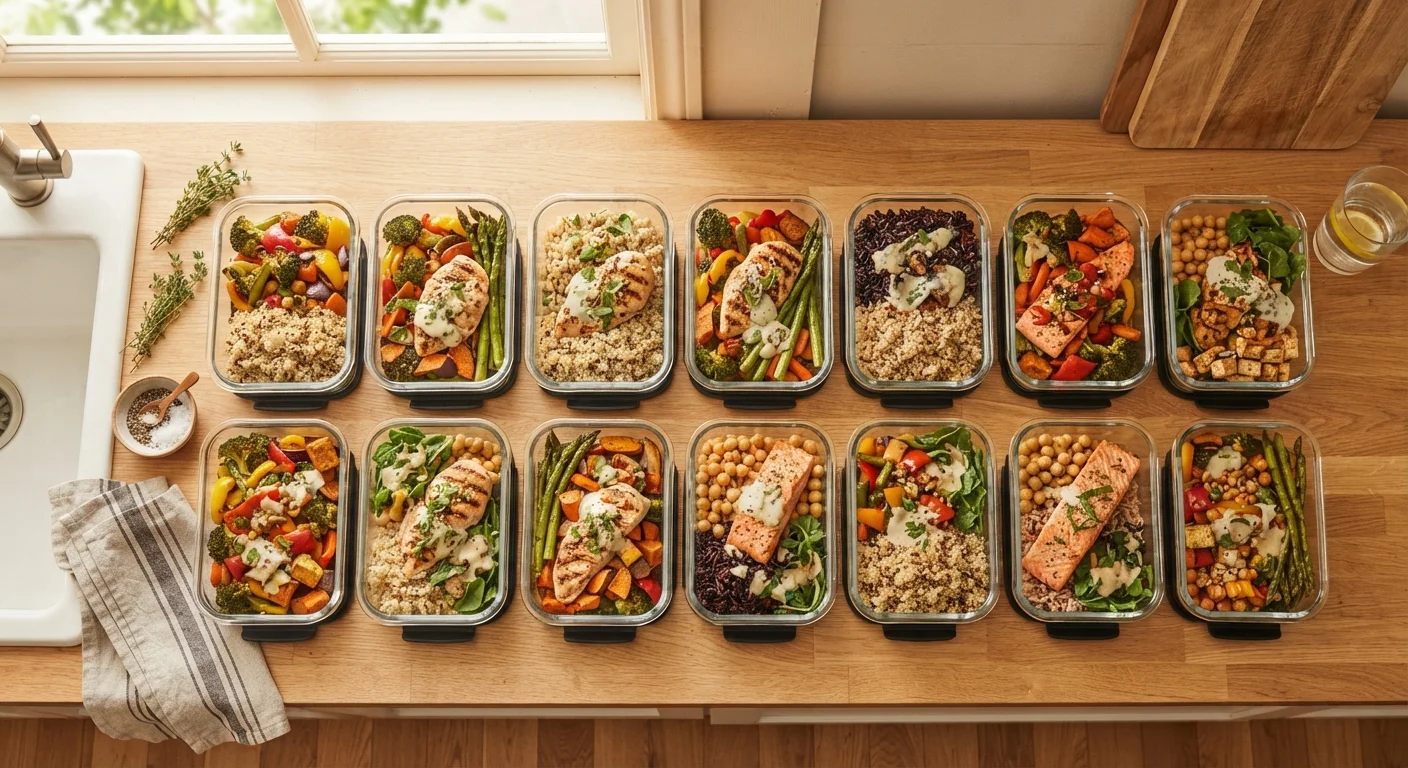
Batch cooking means preparing large quantities of food in one session, then storing portions for use across several days or weeks. The practice is not new, but interest in it has grown alongside tighter grocery budgets and busier weeknight schedules.
A typical session might involve cooking a large pot of grains, roasting two sheet pans of vegetables, and simmering a protein in a slow cooker or Dutch oven simultaneously. Those components then get divided into containers and refrigerated or frozen. See the practical overview of eating well on a tight grocery budget for context on where batch cooking fits within a broader budget-eating strategy.
The method differs from simple leftovers. The goal is intentional preparation of interchangeable components, not reheating a single meal. A batch of cooked lentils might appear in a soup on Monday, a grain bowl on Wednesday, and a wrap filling on Friday.
Where batch cooking genuinely saves money
The financial case for batch cooking is clearest when it changes how a family shops. Buying dried beans in a two-pound bag costs significantly less per serving than buying canned, but most households avoid dried beans because of the soaking and cooking time. Batch cooking removes that barrier: cook a large pot once, portion it out, and the per-serving cost drops sharply.
The same logic applies to whole grains, large cuts of meat, and seasonal produce bought in volume. Purchasing a pork shoulder or a full flat of tomatoes and processing everything in one session captures the price advantage of bulk buying without wasting food. The zero-waste grocery approach covers how bulk purchasing and meal planning work together to reduce what gets thrown away.
~50%
Cost reduction using dried vs. canned beans
USDA food cost data consistently shows dried legumes cost roughly half as much per cooked serving compared to canned equivalents at typical retail prices.
3-4 days
Safe refrigerator storage for cooked proteins
According to USDA food safety guidelines, cooked meat, poultry, and legumes stored in airtight containers remain safe to eat for three to four days when kept at or below 40 degrees Fahrenheit.
Batch cooking also reduces the impulse spending that fills the gap when dinner is not planned. When ready-to-assemble meals are already in the refrigerator, takeout becomes a less frequent necessity rather than a weeknight default.
The real time cost
Proponents often frame batch cooking as a time-saver, and it can be across the week as a whole. However, the upfront session is genuinely long. A thorough batch cook covering proteins, starches, and vegetables for five days can take two to three hours, including chopping, active cooking, cooling, and portioning into containers.
For families with young children, a demanding work schedule, or limited kitchen help, carving out that window is a real obstacle. A session that gets interrupted halfway through can result in partially cooked food that is unsafe to store, which wastes both time and groceries.
A more sustainable entry point for many households is partial batching: cooking just one or two components in bulk rather than attempting a full weekly meal prep. A large pot of rice or a batch of roasted root vegetables takes 45 minutes and still reduces weeknight effort without requiring a full Sunday afternoon commitment.
What holds up well and what does not
Food quality after storage is the factor most batch cooking guides underplay. Cooked grains, legumes, hard-roasted vegetables, soups, stews, and braised proteins all hold their texture and flavor reasonably well when refrigerated for three to four days or frozen for up to three months.
Leafy salads, delicate fish fillets, eggs with runny yolks, and dishes with fresh herbs lose quality quickly after cooking. Pasta and rice can become gummy after reheating if not stored with adequate moisture separation. Matching recipe choices to storage realities is what separates a productive batch session from a week of unappetizing meals. The guide to stretching pantry staples identifies which shelf-stable ingredients batch-cook most effectively.
Food safety in batch cooking
Cooked food must cool to room temperature within two hours before refrigerating, and large batches should be divided into shallow containers to speed cooling. The USDA recommends keeping refrigerated cooked food at or below 40 degrees Fahrenheit and using it within three to four days. For longer storage, freeze portions promptly and label them with the date.
Portion size planning also matters. Preparing too much of one component leads to flavor fatigue by mid-week, which can push family members toward takeout anyway, erasing the financial benefit.
Pros and cons at a glance
The advantages and drawbacks of batch cooking are both concrete. Whether the method works depends largely on a household's schedule, storage capacity, and willingness to eat similar meals across a week.
Lowers cost per serving through bulk purchasing
Buying dried legumes, whole grains, and large protein cuts in volume and cooking them at once captures the price difference between bulk and single-serving packaging.
Reduces weeknight cooking time significantly
When proteins and grains are already cooked, assembling a dinner takes 10 to 15 minutes rather than 45, which lowers the temptation to order takeout.
Cuts food waste by using whole ingredients
A full head of cabbage or a large bunch of kale is easier to use completely when a session is dedicated to processing it, rather than using a portion and letting the rest wilt.
Supports more consistent nutrition across the week
Having portioned, balanced meals ready removes the decision fatigue that often leads to less nutritious last-minute choices on busy evenings.
Reduces reliance on processed convenience foods
Pre-cooked components at home are typically lower in sodium and additives than packaged meal solutions sold at a comparable convenience level.
Upfront time investment is substantial
A full batch session covering a family's weekly meals can run two to three hours, which is a genuine barrier for households without a clear scheduling window.
Requires adequate refrigerator and freezer space
Storing five to seven days of prepped food demands multiple airtight containers and dedicated shelf space, which not every kitchen has available.
Meal repetition can reduce family satisfaction
Eating the same base ingredients across four or five consecutive meals can lead to flavor fatigue, particularly with children, undermining the consistency the method is meant to provide.
Some foods degrade significantly in storage
Delicate proteins, fresh greens, and certain cooked starches lose texture and appeal after refrigeration or freezing, limiting which recipes are practical for batch preparation.
Requires upfront menu planning to avoid waste
Cooking a large batch without a clear plan for how it will be used across the week often results in forgotten containers and discarded food, which cancels the financial benefit.
Families new to batch cooking can consult a step-by-step weekly meal plan built around a $75 grocery run to see how component-based cooking translates into a full week of varied meals without overspending.
This article is for informational purposes only and is not a substitute for advice from a qualified nutrition professional. Individual dietary needs vary; consult a registered dietitian for personalized guidance.