

Key Takeaways
Why pantry staples are the backbone of budget nutrition
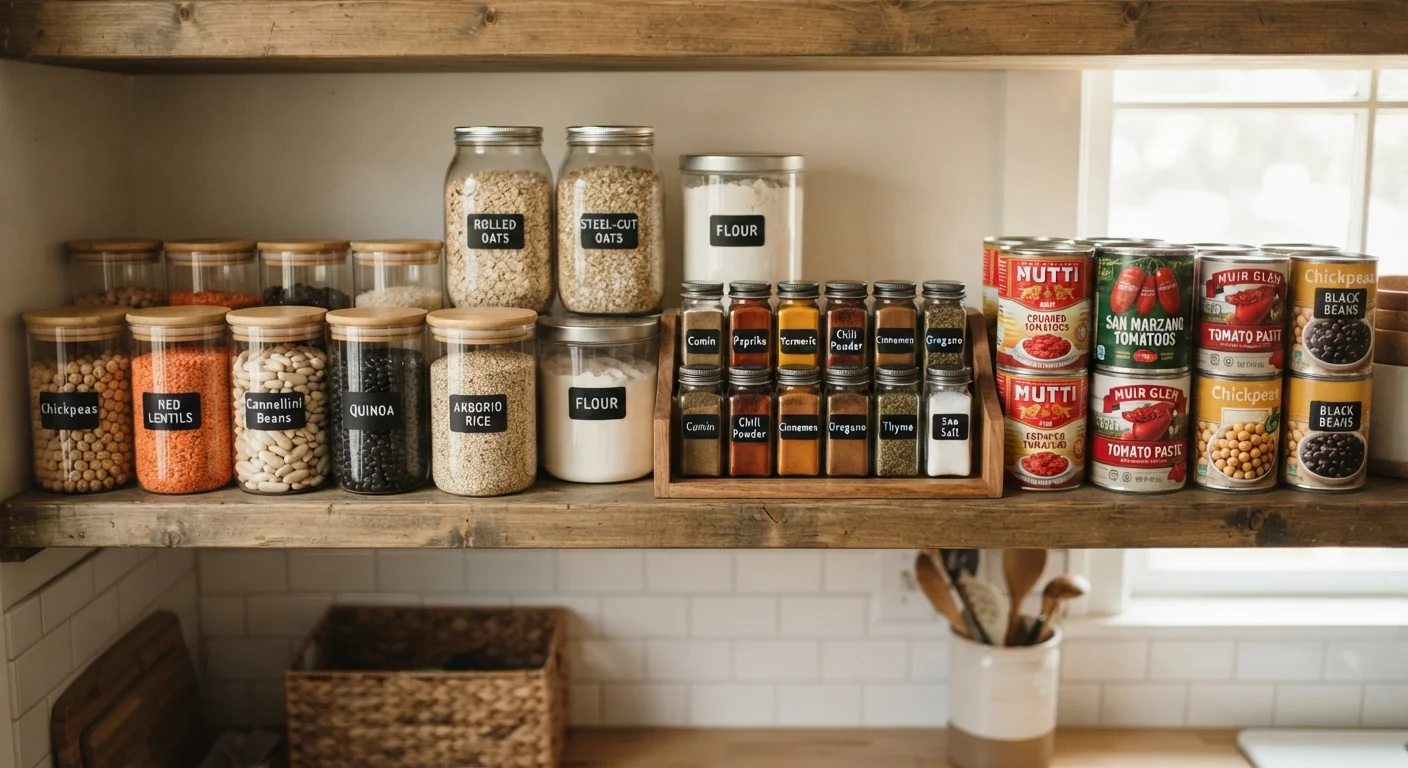
Shelf-stable ingredients cost less per serving than fresh or processed foods, and they hold their nutritional value for months. Brown rice, rolled oats, dried lentils, canned chickpeas, and canned tomatoes each deliver fiber, protein, or key micronutrients at a fraction of the cost of convenience foods. When a family treats these items as the foundation rather than the backup, grocery spending drops without meals becoming monotonous.
The strategy works because staples are flexible. A pot of brown rice can become a grain bowl on Monday, fried rice on Wednesday, and a stuffed pepper filling on Friday. None of those meals require additional expensive ingredients to be satisfying. For a broader look at how affordability and nutrition can work together, see our practical overview of budget-friendly eating.
Core practices for stretching staples across the week
The practices below are grounded in standard dietary guidance and practical meal planning. They are not rigid rules but patterns that make weekly cooking more efficient and nutritionally consistent.
Cook a large batch of grains and legumes at the start of each week
Cooking once and refrigerating portions removes the daily decision of what to cook and how long it will take. Brown rice and cooked beans keep well in the refrigerator for up to five days, meaning the hard work happens once and the rest of the week runs on assembly rather than full cooking sessions.
Plan meals before shopping, not after
Shopping without a plan leads to duplicate items, forgotten essentials, and produce that spoils before it gets used. Writing out five to seven dinners and their shared ingredients before entering the store keeps the cart focused and the total lower.
Use the same ingredient in at least two different meals
Buying a large can of diced tomatoes or a bag of dried lentils only pays off if those ingredients appear in more than one meal. Designing recipes with intentional overlap prevents partial ingredients from going to waste and reduces per-meal cost.
Build meals around fiber-rich carbohydrates and legumes together
Whole grains and legumes consumed together supply complementary amino acids, supporting adequate protein intake without relying on meat at every meal. Both food groups also provide substantial fiber, which supports digestive health and helps maintain a feeling of fullness. This is consistent with general dietary guidance from public health organizations.
Keep a short list of versatile spices and restock them regularly
Without flavor variation, the same base ingredients become repetitive within days. A small set of spices, perhaps cumin, smoked paprika, garlic powder, turmeric, and chili flakes, can produce a wide range of flavor profiles from identical raw ingredients. Restocking them before they run out prevents the cooking routine from stalling.
Quick actions you can take this week
Applying these practices does not require a full kitchen overhaul. The actions below are immediate and low-effort, each delivering a meaningful return on a small investment of time.
Building variety so meals stay appealing
The most common reason families abandon pantry-based cooking is flavor fatigue, not cost or nutrition. The fix is a spice rotation rather than ingredient variety. A base of cooked lentils tastes completely different when seasoned with cumin and coriander versus smoked paprika and garlic versus ginger and turmeric. Dried spices cost very little per use and last a long time, making them one of the highest-return purchases for any pantry.
Acids work the same way. A squeeze of lemon juice or a splash of vinegar at the end of cooking brightens flavors and makes dishes feel lighter without adding cost. Pairing these techniques with affordable plant-based protein sources like eggs and tofu expands the range further.
Textural contrast also helps. Toasting oats before cooking them, or crisping canned chickpeas in a dry pan, adds a satisfying crunch that makes simple meals more filling and interesting. These small finishing steps take under five minutes and require no extra ingredients.
For families ready to plan a full week of meals with a set budget, building a week of nutritious meals around a $75 grocery run offers a concrete, step-by-step framework. Those who want to scale up their cooking efficiency can also explore batch cooking at home to weigh the real advantages and common drawbacks before committing.
This article is for general informational purposes only and is not medical or dietary advice. Consult a registered dietitian or qualified healthcare professional for guidance specific to your health needs or those of your family.