

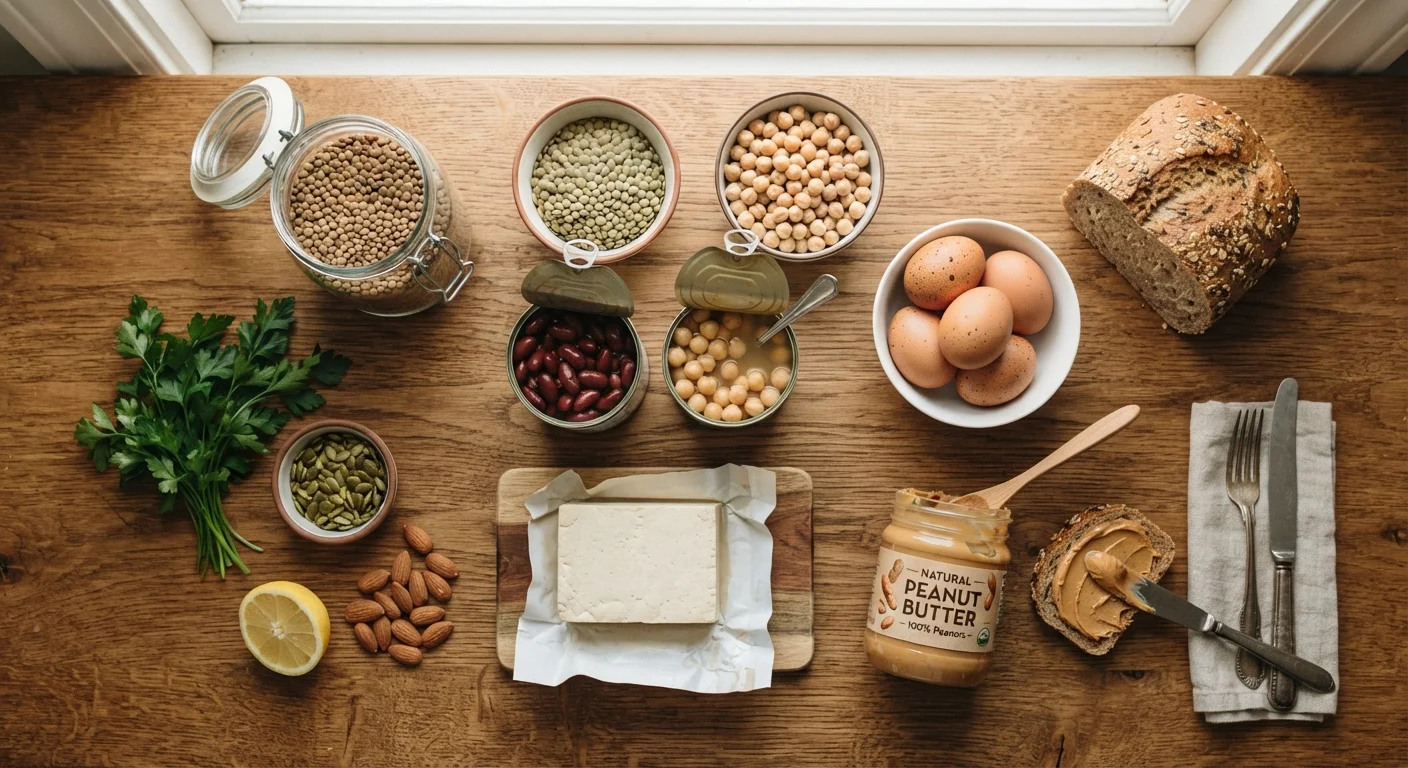
Key Takeaways
Why plant-based protein makes sense for budget-conscious families
Protein is not hard to come by on a tight budget, but it does require shifting away from the assumption that meat must anchor every meal. For most American families, meat is the single most expensive item in the grocery cart. Plant-based protein sources tend to cost a fraction of that, and many of them carry fiber, iron, and other nutrients that meat does not.
This is general nutrition information and is not a substitute for guidance from a registered dietitian or healthcare provider, particularly for households managing specific health conditions or feeding young children. That said, the options below are well-established, widely available, and practical for everyday cooking. For a broader look at how to structure an affordable, nutritious diet, see our practical overview of eating well on a tight grocery budget.
Dried lentils
Lentils are one of the most cost-effective protein sources in the grocery store, typically under $2 per pound in dry form. One cup of cooked lentils provides roughly 18 grams of protein along with substantial fiber and folate. Unlike dried beans, lentils require no soaking and cook in 20 to 30 minutes, which makes them practical on weeknights.
Red lentils break down into a thick, creamy texture well suited to soups and dals. Green and brown varieties hold their shape and work in salads or grain bowls. Either form stretches a small spend into several meals.
Lentils cook in under 30 minutes, with no soaking required, for under $2 a pound.
Canned and dried beans
Black beans, pinto beans, kidney beans, and chickpeas are available in both dried and canned form. Canned beans cost more per ounce than dried but are nutritionally comparable and require no prep time. A can of beans typically runs between $1 and $1.50 and contains two to three servings, each with 7 to 9 grams of protein.
Beans absorb flavor readily, which makes them useful in chili, tacos, stews, curries, and grain bowls. Rinsing canned beans before use reduces sodium significantly without affecting protein content.
Rinsing canned beans cuts sodium without touching the protein content.
Tofu
Tofu is made from soybeans and is one of the few plant proteins considered a complete protein, meaning it contains all nine essential amino acids. A 14-ounce block of firm tofu typically costs between $2 and $3 and provides roughly 30 to 35 grams of protein across the whole block.
Firm tofu can be cubed and pan-fried, baked, or added to stir-fries. Silken tofu works in smoothies, sauces, and scrambles. Because tofu absorbs marinades well, it adapts to a wide range of cuisines and flavor profiles, which helps prevent meal fatigue.
Tofu is a complete protein and costs as little as $2 to $3 per block.
Eggs
Eggs are among the most nutrient-dense affordable foods available. Each egg provides roughly 6 grams of high-quality protein along with vitamin D, choline, and B vitamins. A dozen eggs typically costs between $2 and $4 depending on the region and store.
Eggs work across all three meals: scrambled or poached for breakfast, hard-boiled in a salad for lunch, or fried over a grain bowl for dinner. They also bind patties and baked goods, extending other ingredients further. Families who eat eggs can use them as a reliable, fast-cooking protein anchor throughout the week.
Each egg delivers roughly 6 grams of protein alongside several B vitamins and choline.
Peanut butter and other nut butters
A standard 16-ounce jar of peanut butter contains roughly 56 grams of protein and costs between $3 and $5, making the cost-per-gram of protein very competitive. Peanut butter also provides healthy unsaturated fats and vitamin E, which support general cardiovascular health.
It works as a spread, a sauce base (think peanut noodles), a smoothie addition, or a dip for vegetables and fruit. Sunflower seed butter is a useful alternative for households managing peanut allergies. Choosing varieties without added sugar or partially hydrogenated oils keeps the nutritional profile cleaner.
A jar of peanut butter delivers over 50 grams of protein for just a few dollars.
Edamame
Edamame, which are young soybeans, are sold frozen and shelled for a modest price, usually around $2 to $3 per 12-ounce bag. A half-cup serving provides about 9 grams of complete protein. Edamame is one of the few vegetables that qualifies as a complete protein source.
Frozen edamame can be microwaved in minutes and served as a snack, stirred into fried rice, or added to soups. Because they are sold frozen and pre-shelled, there is minimal prep and virtually no waste, which matters when families are watching food costs closely.
Edamame is a complete protein vegetable that cooks from frozen in just a few minutes.
Plain yogurt with higher protein content
Traditional and Greek-style yogurts vary in protein content, with strained varieties providing up to 15 to 17 grams per serving. Store-brand versions are generally the most affordable, often priced at $1 to $2 per single-serve container. Larger tubs bring the cost per serving down further.
Plain yogurt works in savory preparations too, not just sweet ones. It can replace sour cream in tacos, thin into a sauce, or serve as the base for a quick dip with garlic and herbs. Choosing unsweetened varieties avoids added sugar while keeping the protein benefit intact.
Strained yogurt can deliver up to 17 grams of protein per serving at low cost per container.
Putting it all together in your weekly meals
The proteins above work best when you rotate them across the week rather than relying on a single one. A meal plan built around beans on Monday, lentil soup mid-week, tofu stir-fry on Friday, and eggs for weekend brunch gives your household variety without adding cost. Pairing legumes with grains (rice, oats, whole-wheat bread) throughout the day helps cover the full range of essential amino acids your body needs.
Mix proteins across the day, not just at dinner
Many families concentrate protein at dinner and underserve it at breakfast and lunch. Spreading protein sources across all three meals, such as eggs at breakfast, beans at lunch, and tofu or lentils at dinner, helps the body use dietary protein more efficiently. It also makes meal planning easier because no single meal bears the full nutritional load.
If you want a concrete plan built around these ingredients, building a week of nutritious meals around a $75 grocery run walks through the math and the menus. For ideas on turning these pantry staples into varied, satisfying dinners, stretching pantry staples into nutritious meals all week long offers a practical framework.