

Key Takeaways
Why food waste is a budget problem first
The average American household throws away a substantial portion of the food it buys every week. That waste is not just an environmental concern; it is money already spent on groceries that never becomes a meal. Before focusing on what to buy, it helps to understand where the losses tend to happen: produce that wilts before it gets used, leftovers that sit past their appeal, and pantry items purchased without a clear plan.
Cutting waste does not require drastic changes to what your family eats. It mostly requires a small shift in how you shop and store food. The steps below walk through that process in a practical order, so each action builds on the last.
For more ideas on building balanced, affordable meals, the Healthy Eating hub is a good place to browse once you have the basics in place.
What you will need before you start
What you will need
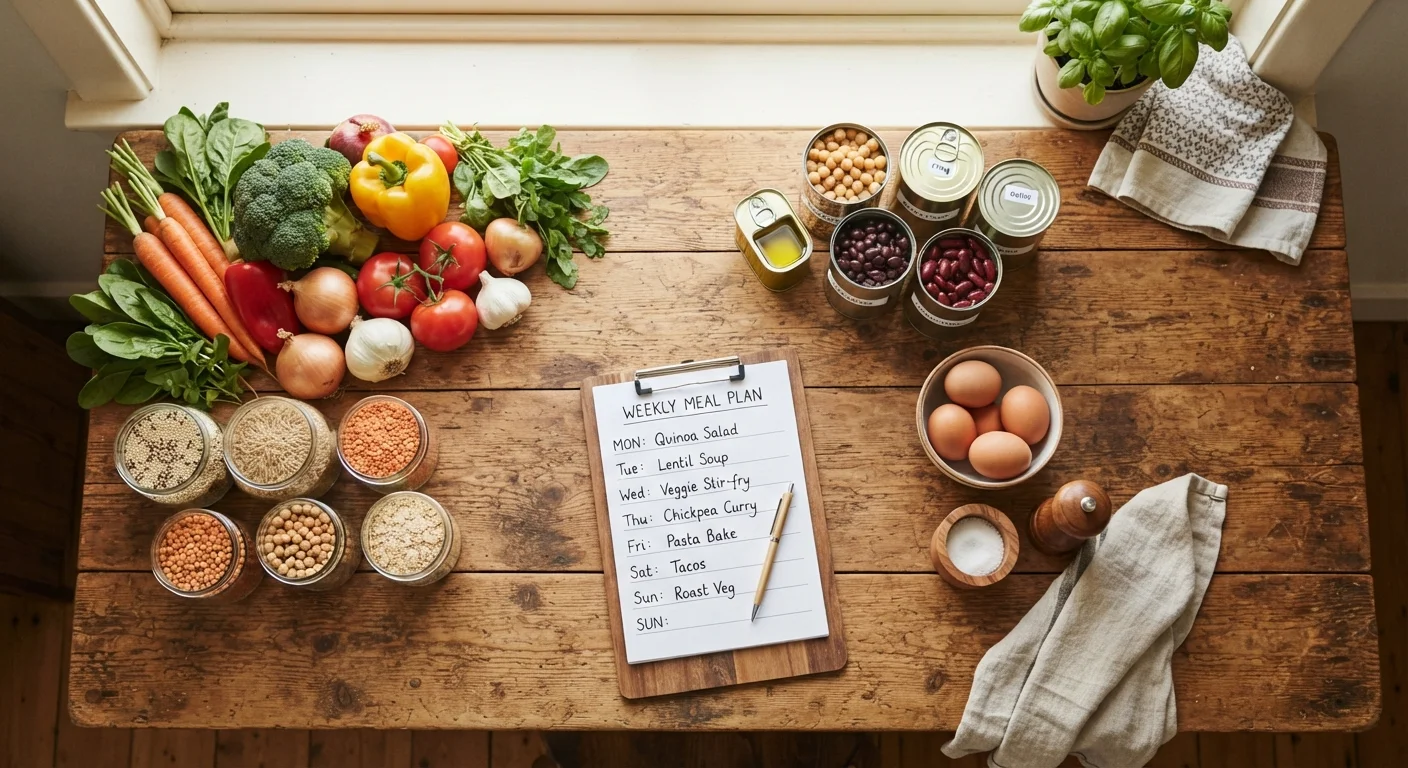
You do not need a special app or a subscription meal-planning service. A piece of paper and a clear inventory of what is already in your kitchen are enough to get started.
Step-by-step: from pantry check to checkout
Check your pantry, fridge, and freezer first
Before writing a single item on a shopping list, open every cabinet and check what is already there. Note items that are close to their use-by date and ingredients that appear in multiple potential meals. This inventory step prevents duplicate purchases and gives you a head start on building meals around what you already own.
Plan five to seven meals around overlapping ingredients
Write out the meals you want to make this week, then look for ingredient overlap. A roasted chicken on Monday can become a grain bowl on Tuesday and a simple soup by Wednesday. A bag of spinach used in an omelet can also go into a pasta dish later in the week. The goal is to buy ingredients that do multiple jobs rather than single-purpose items that might go unused.
Stretching pantry staples into multiple meals is a reliable technique for cutting both waste and cost at the same time.
Write a specific, category-organized shopping list
Once your meals are planned, translate them into a shopping list organized by section of the store: produce, proteins, dairy, grains, canned goods, and frozen. A category-based list reduces back-and-forth in the store and makes it easier to spot anything you might be doubling up on. Stick to the list unless a genuinely flexible substitution presents itself.
Store food correctly as soon as you get home
Proper storage is where a lot of potential waste is either prevented or lost. Herbs last longer standing in a small jar of water in the fridge. Leafy greens stay crisp when stored with a dry paper towel to absorb excess moisture. Bread that will not be used within two days freezes well. Move older items to the front of the fridge and newer purchases to the back so nothing gets forgotten.
Use scraps and near-expired items intentionally
Vegetable scraps such as carrot peels, celery ends, and onion skins can be collected in a freezer bag and turned into a simple stock when the bag is full. Overripe bananas are well-suited for baking. Slightly wilted vegetables work fine in soups, stir-fries, or egg scrambles where texture matters less. Building this habit means almost nothing edible leaves your kitchen as waste.
Batch cooking is a practical next step once you are comfortable with weekly planning. Cooking a large pot of grains or legumes once and using them across several meals reduces both active cooking time and the risk of ingredients expiring before they get used.
Keeping nutrition intact on a tighter budget
Spending less does not mean eating worse, but it does require some deliberate choices. Whole grains, canned legumes, eggs, and frozen vegetables consistently deliver strong nutritional value at a lower cost per serving than many fresh or processed alternatives. Frozen vegetables are worth a second look: they are harvested and frozen quickly, which preserves most of their nutrients.
Protein is often where families feel the budget squeeze most. Beans, lentils, and eggs are among the most affordable protein sources available, and they work across a wide range of dishes. Swapping one or two meat-based meals per week for plant-based alternatives can noticeably reduce a weekly grocery bill without reducing the protein your family gets.
Produce costs vary a great deal by season. Checking a seasonal produce calendar before you shop helps you buy what is naturally lower-priced and higher in freshness at any given time of year. Pairing seasonal choices with pantry staples is how most consistent budget shoppers keep both the bill and the nutrition in a good range. For a concrete example of this in practice, see building a week of nutritious meals around a $75 grocery run.
Small swaps add up over a month
Replacing one packaged snack with homemade popcorn, swapping one takeout meal for a pantry-based dinner, and using frozen rather than fresh produce for cooked dishes are each modest changes. Combined over four weeks, they tend to produce a noticeable difference in both the grocery bill and the amount of food your household throws away.