

Key Takeaways
Why frozen vegetables get an undeserved reputation
Frozen vegetables occupy a strange place in how many families think about healthy eating. They are cheap, convenient, and widely available, which paradoxically leads some shoppers to assume they must be nutritionally inferior. That assumption is not grounded in science.
The freezing process itself does not destroy nutritional value in any meaningful way. What it does is stop the clock on a vegetable that was harvested at full maturity and processed within a short window. Compare that to the supply chain for fresh produce, where time, temperature fluctuations, and handling all work against nutrient retention before the vegetable ever reaches your kitchen.
Concerns about frozen food are sometimes tied to highly processed frozen meals, which can be high in sodium, saturated fat, and refined ingredients. Plain frozen vegetables are a completely different category. Conflating the two leads families to avoid a genuinely useful food. If you want to see how this kind of misunderstanding affects grocery decisions more broadly, common budget grocery shopping mistakes covers several patterns that undermine nutrition goals even when spending is low.
What the science actually says about nutrients and freezing
Blanching, the heat treatment applied before freezing, does reduce some heat-sensitive and water-soluble nutrients, particularly vitamin C and folate. The loss is real but modest, and it is largely offset by the fact that nutrient degradation stops once the vegetable is frozen and held at a stable temperature.
By contrast, fresh vegetables continue to lose nutrients after harvest. A tomato picked green and ripened in transit, or a bag of spinach stored in a refrigerator for five days, has been losing nutritional value the whole time. The comparison between fresh and frozen is not a simple win for either category. It depends on how fresh the fresh produce actually is and how quickly a household uses it.
Myth
Frozen vegetables lose most of their nutrients during freezing, making them an inferior choice.
Fact
Freezing preserves the majority of nutrients in vegetables, and in some cases frozen produce retains more vitamins than fresh produce stored for several days.
Vegetables destined for freezing are harvested at peak ripeness and processed quickly, usually within hours. The blanching step (brief exposure to hot water or steam) that precedes freezing does cause some loss of water-soluble vitamins like vitamin C and certain B vitamins. However, once blanched and frozen, nutrient degradation slows considerably.
Fresh vegetables held in a refrigerator or on a store shelf continue losing nutrients over days. Research published in the Journal of Agricultural and Food Chemistry found that some frozen vegetables had comparable or higher levels of certain nutrients than their fresh counterparts stored for several days. For families who cannot use fresh produce quickly, frozen is a sound nutritional option.
Myth
Fresh vegetables are always the healthier option and should be prioritized over frozen.
Fact
Fresh vegetables purchased and eaten the same day are excellent, but frozen vegetables harvested and frozen at peak ripeness can match or exceed the nutritional value of fresh produce that has traveled long distances or sat in storage.
The word 'fresh' on a supermarket display does not tell you when the produce was picked or how long it spent in transit and cold storage. Some fresh vegetables travel thousands of miles before reaching a store, and nutrient content declines throughout that journey.
Frozen produce skips that extended supply chain. For vegetables like peas and corn, which deteriorate quickly after harvest, freezing can lock in a nutritional profile that is genuinely difficult to match with out-of-season fresh alternatives. The practical takeaway: both fresh and frozen vegetables belong in a healthy kitchen, and choosing frozen is not a nutritional compromise.
Myth
Frozen vegetables are more expensive than fresh when you account for what you actually eat.
Fact
Frozen vegetables generally cost less per edible serving than fresh equivalents, and they produce almost no food waste.
A bag of frozen broccoli contains only the edible florets, trimmed and ready to cook. A fresh head of broccoli includes the stalk and leaves, which many households discard, meaning you pay for weight you may not use. Frozen bags also stay usable for months, so there is no spoilage cost if life gets busy and a meal plan changes.
Food waste is a real budget drain. The U.S. Department of Agriculture has noted that American households waste a significant share of the food they buy, and fresh produce spoils faster than almost any other category. Keeping a well-stocked freezer with plain frozen vegetables is a straightforward strategy for reducing that waste while keeping food costs predictable. For more on reducing waste while eating well, see the zero-waste grocery guide.
Myth
Frozen vegetables are too mushy or unpleasant in texture to use in most recipes.
Fact
Texture differences exist for some vegetables, but the right cooking method produces results that work well in the majority of everyday dishes.
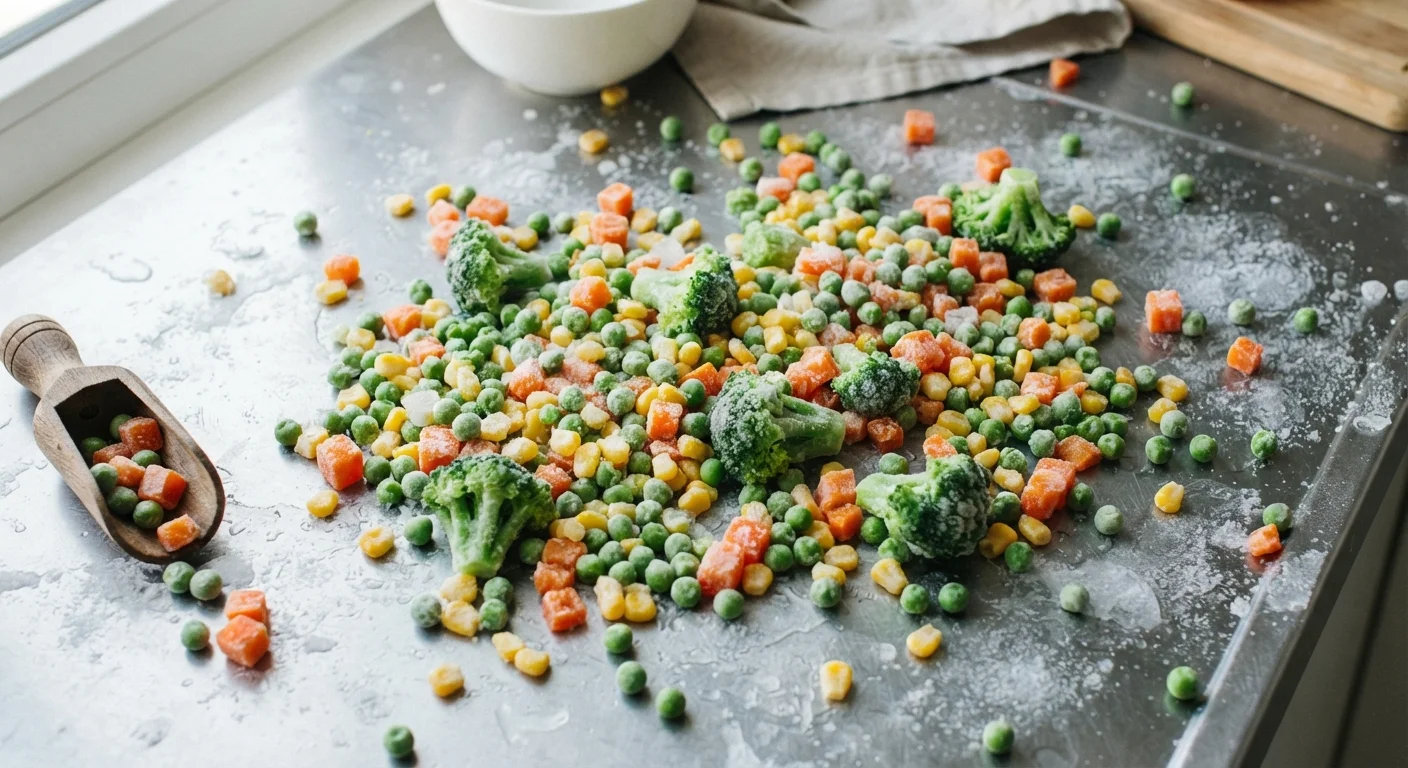
Freezing causes ice crystals to form inside plant cells, which can soften cell walls after thawing. This matters more for some vegetables than others. Leafy greens, zucchini, and cucumber do not hold up well to freezing. However, peas, corn, edamame, carrots, broccoli, cauliflower, green beans, and lima beans all perform well when cooked from frozen.
Cooking method matters. Roasting frozen vegetables in a hot oven (around 425 degrees Fahrenheit) without thawing first draws out moisture and produces edges that caramelize rather than steam. Stir-frying over high heat works similarly. Boiling or microwaving in a covered dish results in softer texture, which is fine for soups, stews, casseroles, and purees where firmness is not the goal.
Myth
Eating frozen vegetables regularly means you are settling for a low-quality diet.
Fact
Dietary quality depends on overall eating patterns, not the form in which a vegetable was preserved.
Public health guidance, including the U.S. Dietary Guidelines for Americans, counts frozen vegetables toward daily vegetable intake the same as fresh or canned. There is no nutritional hierarchy that places freezer aisle vegetables below produce section vegetables as a category.
For families working with a limited grocery budget, frozen vegetables are one of the most reliable ways to maintain consistent vegetable variety throughout the month. A freezer stocked with several varieties supports meal planning without the pressure of using everything before it spoils. That reliability matters for families navigating tight weekly budgets, as outlined in the practical overview of eating well on a tight grocery budget.
For most families buying groceries once or twice a week, frozen vegetables are a dependable way to keep nutrient-dense food available on any day of the week without racing against spoilage.
Practical ways to use frozen vegetables every day
One common barrier to using frozen vegetables more often is not knowing how to incorporate them without the results feeling like an afterthought. A few reliable techniques make them a natural part of everyday cooking.
Add frozen peas, corn, or edamame directly to soups and grain bowls in the last two minutes of cooking. They warm through quickly and hold their color. Frozen spinach or kale, thawed and squeezed dry, blends into pasta sauces, egg dishes, and bean-based dips without changing flavor noticeably. Frozen broccoli and cauliflower roast well from frozen at high heat, producing a result that works as a side dish or a base for grain bowls.
Keeping three or four varieties of plain frozen vegetables on hand gives a household real flexibility. It reduces the pressure to shop frequently and makes it easier to add a vegetable component to almost any meal without extra planning. For families trying to build a reliable, affordable eating routine, that flexibility has practical value, as discussed in the guide to eating well on a tight grocery budget.
Check the ingredient label first
Not all frozen vegetable products are equal. Some bags contain added salt, butter sauces, or seasoning blends that can significantly raise sodium or saturated fat content. For the most nutritional value, choose plain, single-ingredient frozen vegetables with no added ingredients listed on the label.
This article is for general informational purposes only and is not medical or dietary advice. For guidance tailored to your specific health needs, consult a registered dietitian or qualified healthcare professional.