

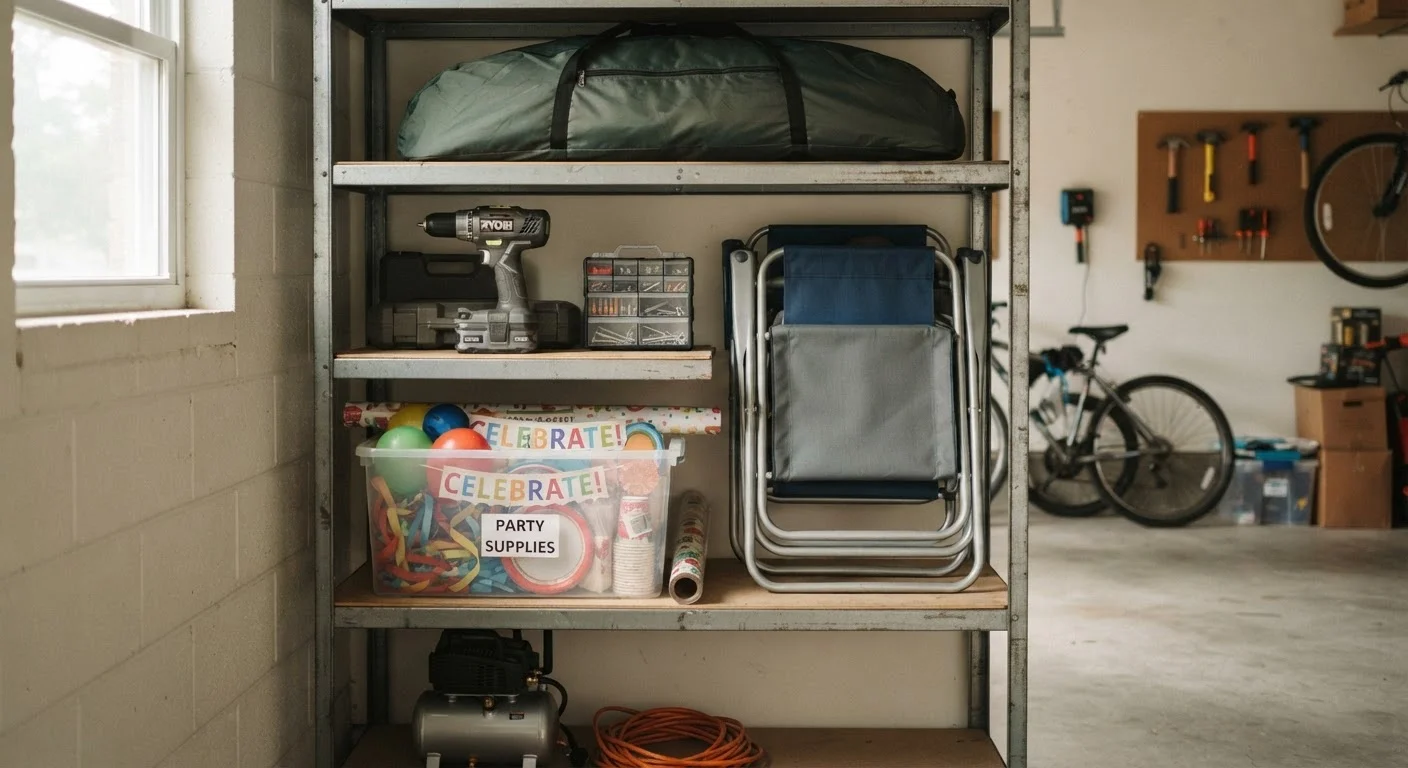
Key Takeaways
Lower upfront cost for infrequently needed items
Renting avoids a large one-time purchase for something used rarely. A family can access a $600 piece of equipment for $50 in rental fees and walk away with no ongoing obligation.
No storage burden after use
Returning a rented item means it takes up zero space in your home. For families in smaller houses or apartments, this is a practical advantage that compounds over multiple items.
Access to better equipment than you might buy
Rental shops and platforms often carry professional-grade tools or higher-tier camping gear. You get the performance benefit without the purchase price.
No maintenance or repair costs
When a rented item breaks during normal use, the rental provider is responsible for repair or replacement. That removes a hidden ownership cost entirely.
Flexibility to try before committing
Renting camping gear before buying, for example, lets families identify what they actually need and what they would skip, reducing the risk of an expensive misfit purchase.
Cumulative rental fees exceed purchase price over time
For items used regularly, rental costs stack up. A piece of equipment rented at $60 per use crosses the cost of ownership after fewer than ten rentals for many categories.
Availability is not always guaranteed
Popular rental items, like trailers or specialty tools, can be unavailable on short notice or during peak seasons. Ownership removes that scheduling uncertainty.
Condition and hygiene of shared items varies
Rented gear has been used by others and may show wear, missing parts, or less-than-ideal cleaning. For personal-fit items like helmets or footwear, this is a genuine concern.
Logistical overhead adds up
Picking up, returning, and managing rental windows takes time. For families with tight schedules, the friction of renting can offset the financial benefit for items used regularly.
Damage liability can create unexpected costs
Most rental agreements hold the renter responsible for damage beyond normal wear. An accidental ding or break can turn a low-cost rental into a significant unexpected expense.
Our Verdict
Neither renting nor owning is universally the smarter move. The decision comes down to how often an item gets used, how much space you have, and whether the purchase price plus ongoing costs beats the cumulative rental fees. For items that sit idle most of the year, renting tends to save money and space. For items used regularly or that require a personal fit, ownership usually wins.
Families with limited storage, unpredictable needs, or a one-time event will generally find renting the more practical and cost-effective path.
Why the buy-it-once mindset can backfire
Buying something outright feels like a win. You pay once, you own it, and you never have to think about rental fees again. The problem is that many household purchases end up being used once or twice and then stored indefinitely. A pressure washer, a tile saw, a bounce house: these are items that cost real money and demand real space, yet many families use them fewer than three times before they sit dormant for years.
The full cost of ownership is rarely just the sticker price. Add in storage, insurance where applicable, maintenance, and the loss in resale value, and the math shifts considerably. Understanding the difference between frugal and cheap thinking helps here: buying something you rarely need is not frugal, even if the unit price felt reasonable.
Lower upfront cost for infrequently needed items
Renting avoids a large one-time purchase for something used rarely. A family can access a $600 piece of equipment for $50 in rental fees and walk away with no ongoing obligation.
No storage burden after use
Returning a rented item means it takes up zero space in your home. For families in smaller houses or apartments, this is a practical advantage that compounds over multiple items.
Access to better equipment than you might buy
Rental shops and platforms often carry professional-grade tools or higher-tier camping gear. You get the performance benefit without the purchase price.
No maintenance or repair costs
When a rented item breaks during normal use, the rental provider is responsible for repair or replacement. That removes a hidden ownership cost entirely.
Flexibility to try before committing
Renting camping gear before buying, for example, lets families identify what they actually need and what they would skip, reducing the risk of an expensive misfit purchase.
Where renting has a clear edge
Renting works best when an item is needed for a defined window of time and has a high purchase price relative to that use. Specialty tools are a textbook example. A pipe threader, a sod cutter, or a concrete mixer can each cost hundreds or thousands of dollars new, yet a weekend rental from a tool shop or a peer-to-peer platform typically runs $40 to $150 per day. If you need it for a single landscaping project, renting is straightforward math.
Party and event supplies follow the same logic. Tables, chairs, linens, and serving equipment take up enormous storage space and depreciate quickly in resale value. Families planning a graduation party or a backyard wedding usually come out ahead renting rather than buying items that will see one afternoon of use. Camping gear for a first-time trip is another good candidate: renting before committing lets families figure out what they actually need before spending hundreds on equipment they may never use again. For more on the travel side of that calculus, see camping vs. budget hotels for families.
Cumulative rental fees exceed purchase price over time
For items used regularly, rental costs stack up. A piece of equipment rented at $60 per use crosses the cost of ownership after fewer than ten rentals for many categories.
Availability is not always guaranteed
Popular rental items, like trailers or specialty tools, can be unavailable on short notice or during peak seasons. Ownership removes that scheduling uncertainty.
Condition and hygiene of shared items varies
Rented gear has been used by others and may show wear, missing parts, or less-than-ideal cleaning. For personal-fit items like helmets or footwear, this is a genuine concern.
Logistical overhead adds up
Picking up, returning, and managing rental windows takes time. For families with tight schedules, the friction of renting can offset the financial benefit for items used regularly.
Damage liability can create unexpected costs
Most rental agreements hold the renter responsible for damage beyond normal wear. An accidental ding or break can turn a low-cost rental into a significant unexpected expense.
When owning makes more sense
Frequency changes the equation. If a family uses a specific piece of equipment more than six or eight times a year, rental fees accumulate past the purchase price relatively quickly. A quality stand mixer, a trailer hitch cargo carrier used every camping season, or a set of basic power tools used for routine home maintenance tend to justify ownership at that frequency.
Personal fit matters too. Safety helmets, hiking boots, and child safety seats should generally be owned rather than shared, because fit and condition directly affect safety. Weighing DIY repair costs against hiring a professional raises a related point: having the right tools on hand for recurring projects can make ownership the more practical long-term position.
4x
Uses per year where renting typically breaks even
General cost-per-use comparisons across tool and equipment categories suggest that items used fewer than four times annually rarely justify purchase over rental.
30%+
Average depreciation in first year for power tools
Consumer goods research indicates power tools and similar equipment can lose a significant portion of resale value in the first year alone, affecting the real cost of ownership.
Sentimental or multi-generational use is another factor. Items likely to be shared across years and family members, like a quality set of kitchen knives or basic garden tools, generally pay for themselves through sustained daily use.
Building a simple decision framework
Before purchasing, ask three questions. First, how many times per year will this item get used? Fewer than four times is a strong signal to rent. Second, where will it be stored, and what is that space worth? In a small home or apartment, storage has real opportunity cost. Third, what does the cumulative rental fee look like over two to three years compared to the purchase price plus maintenance?
Peer-to-peer renting has changed the options
Community-based platforms and neighbourhood apps now let families rent items directly from other households, often at lower rates than traditional shops. Categories range from power tools and trailers to party tables and camping tents. Availability varies by location and platform, so it is worth checking what exists in your area before assuming the only option is a traditional rental counter.
Peer-to-peer platforms have made renting more accessible than it was a decade ago. Neighbours renting tools, camping equipment, or party supplies to one another through local apps or community groups can bring costs down further while keeping items in active use rather than collecting dust. If you are exploring which recurring spending habits to cut or keep, auditing your family subscriptions uses a similar cost-per-use lens and may surface other areas to reconsider.
For items you do decide to buy, shopping the secondhand market can reduce the upfront cost significantly and lower the financial risk if the item turns out to see less use than expected.