

Key Takeaways
The upgrade gap: why new equipment does not automatically lower bills
Many homeowners invest in a new HVAC unit, an energy-efficient water heater, or upgraded windows and then wait for the utility bills to drop. When they do not, frustration follows. The problem is rarely the equipment itself. It is the system around the equipment that has not changed.
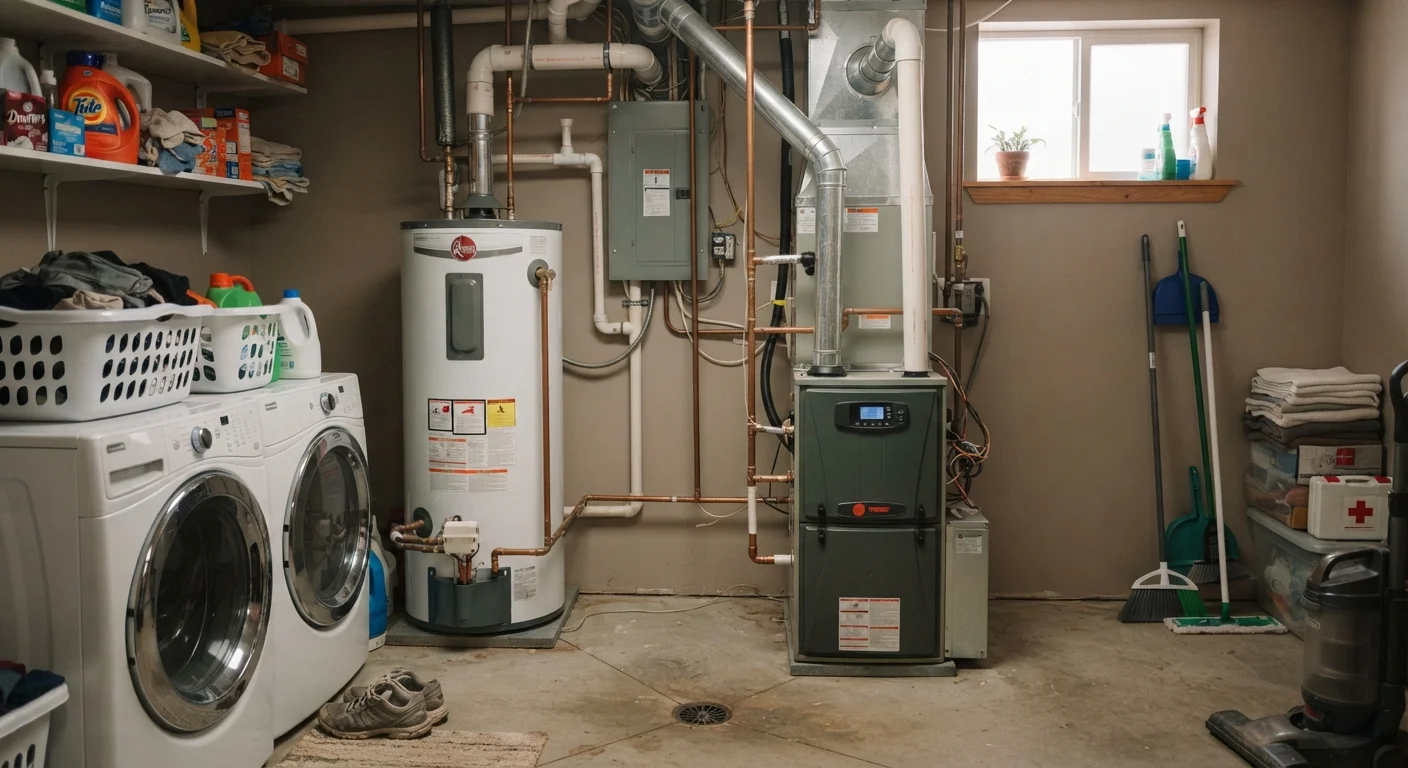
A high-efficiency furnace, for example, is rated under laboratory conditions. In a house with leaky ducts, gaps around outlets, or an under-insulated attic, a significant portion of the conditioned air never reaches living spaces. The furnace works harder to compensate, and the bill reflects that. Understanding why bills stay high requires looking at the home as a system, not a collection of individual parts.
For a broader look at how air and moisture infiltration affects energy costs, see our guide to weatherproofing basics.
Replacing appliances without addressing air sealing or duct leaks first.
Why it happens: Appliance efficiency ratings are visible and marketable. Air sealing and duct work are invisible and rarely discussed at the point of sale.
Setting a programmable thermostat once and leaving it unchanged for years.
Why it happens: The initial setup feels like a completed task, so homeowners rarely revisit the schedule even as household routines change significantly.
Ignoring phantom load from electronics and older appliances.
Why it happens: Standby power draw is invisible and the per-device cost seems trivial, so it rarely registers as a meaningful budget item.
Skipping the attic when upgrading insulation throughout the rest of the house.
Why it happens: Attic access is inconvenient, and homeowners often assume wall or window upgrades provide the most benefit. The attic is frequently the largest single source of heat loss.
Keeping water heater temperature set higher than necessary.
Why it happens: Factory default settings are often above what most households need, and the setting goes unexamined after installation.
Hidden inefficiencies that survive most renovations
Some energy losses are structural and go unaddressed during typical upgrades. Attic bypasses, which are gaps where interior walls meet the attic floor, allow warm air to escape in winter and infiltrate in summer. These gaps exist in most homes built before the 1990s and in many built after. Caulking and weatherstripping around windows get replaced, but the air pathway through interior wall cavities often stays open.
Duct systems are another area where efficiency gains evaporate. According to the U.S. Department of Energy, duct leakage can account for 20 to 30 percent of heating and cooling energy loss in a typical home. Replacing the furnace does not fix the ducts. Sealing and insulating ductwork in unconditioned spaces such as attics and crawl spaces is a separate job that many renovation projects skip entirely.
Beliefs about insulation also play a role. Common insulation myths lead some homeowners to skip attic top-ups after installing new roofing, assuming the roof itself provides sufficient thermal protection. It does not.
Duct sealing and attic work may require permits
In some jurisdictions, work on HVAC ductwork or significant insulation changes requires a permit or inspection. Requirements vary by location and scope of work. Check with your local building department before beginning any project, and hire licensed contractors for work involving gas lines, electrical connections, or structural components.
Behavioral patterns that undo equipment savings
Thermostat settings deserve honest attention. A programmable or smart thermostat delivers savings only when its schedule actually matches occupancy. Many households program it once and never revisit it after work schedules shift, children start school, or a family member begins working from home. The thermostat then conditions empty rooms or undershoots comfort targets, prompting manual overrides that erase automated savings.
Standby power, sometimes called phantom load, is the electricity devices draw while switched off or in sleep mode. Televisions, game consoles, desktop computers, and older appliances with digital displays draw power continuously. The U.S. Energy Information Administration estimates that standby power can account for roughly 5 to 10 percent of a home's annual electricity use. No appliance upgrade eliminates this unless those devices are also replaced or unplugged when idle.
Hot water habits matter too. A new water heater with a high energy factor still has to heat the volume of water a household uses. Long showers, running hot water while washing dishes by hand, or setting the tank temperature above 120 degrees Fahrenheit all increase the load regardless of equipment efficiency. These patterns carry the same financial logic as everyday spending habits that silently add up.
How to find where your money is actually going
A home energy audit is the most direct way to locate specific losses. Many utility providers offer audits at no cost or reduced cost to residential customers. A qualified auditor uses a blower door test to measure total air leakage and often uses a thermal camera to reveal insulation gaps and duct problems that visual inspection misses. The audit report typically ranks improvements by cost-effectiveness, so families can act on the highest-return fixes first rather than guessing.
Reviewing 12 months of utility bills alongside weather data for the same period helps identify whether consumption is tracking outdoor temperatures as it should, or whether usage is climbing independently of weather. An unusually high baseload, meaning consumption that stays elevated even during mild months when heating and cooling demand is low, often points to standby power or water heating inefficiency.
Small, low-cost steps such as adding door sweeps, insulating the attic hatch, and sealing around pipe penetrations frequently deliver measurable bill reductions before any major purchase is needed.