

Key Takeaways
Cost of convenience
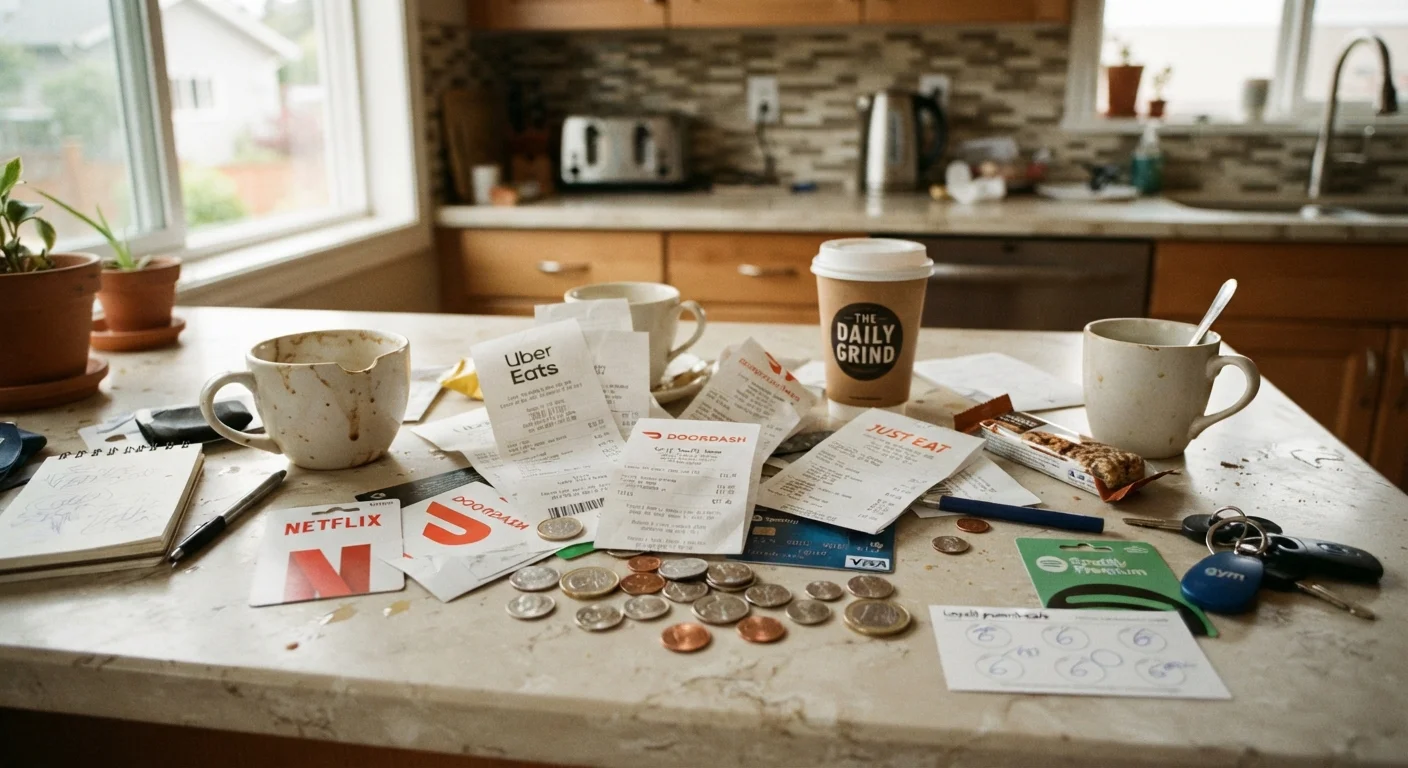
The cost of convenience refers to the extra money people pay, often without noticing, to make everyday tasks easier or faster. These costs show up as delivery fees, service charges, impulse add-ons, and recurring subscriptions that each seem minor but accumulate steadily. Most families never tally them because each charge feels too small to bother with.
In personal finance, these are sometimes called 'friction costs' or 'passive spending leaks': charges that persist because canceling or avoiding them requires deliberate effort that most people never get around to.
What makes convenience costs so easy to miss
Convenience costs share one trait: they are individually small. A $2.99 delivery fee, a $0.99 bag surcharge, a $14.99 monthly charge that auto-renewed without much thought. None of these triggers the same mental alert as a large, deliberate purchase. That is precisely why they accumulate so effectively.
Psychologists call this 'pain of payment': people feel more reluctant to spend when a purchase is visible, immediate, and tangible. Subscription billing and bundled fees are structured in the opposite way, spaced out, automatic, and folded into totals that blur together on a statement. The friction that would normally slow down spending is removed by design.
The pattern appears across every spending category a typical family has. Food delivery platforms charge service fees, small-order fees, and surge pricing on top of menu markups. Streaming services multiply when each family member wants a different platform. Travel bookings pile on seat selection fees, checked-bag charges, and hotel resort fees that appear only at checkout. Packing strategically for family trips can eliminate some of those bag fees, but only if the cost is on a family's radar to begin with.
Subscriptions: the clearest example of invisible spending
Subscriptions are the most documented category of convenience-related spending leakage. The business model depends on low monthly prices that feel inconsequential and on auto-renewal that removes the decision to continue. Most households carry more active subscriptions than they can name from memory.
The overlap problem makes this worse. Two streaming services may cover 90% of what a family actually watches. A second cloud storage plan might exist only because switching felt like too much effort. A fitness app subscription may have outlasted the habit it was meant to support.
Make the review automatic, not a one-time event
Set a recurring calendar reminder once per quarter to check your bank and credit card statements for all charges under $20. This takes less than 20 minutes and catches subscriptions that have renewed without your attention. Treating it as routine removes the guilt of 'missing' something and turns it into a normal financial habit.
A practical approach is to list every recurring charge, note when each was last used, and cancel anything that cannot be justified in one sentence. The family subscription audit guide offers a structured way to do this without spending an entire afternoon on it.
Grocery and food habits that carry hidden premiums
The grocery store is full of convenience pricing, even before delivery fees enter the picture. Pre-washed salad greens cost significantly more per ounce than a whole head of lettuce. Single-serve yogurt cups carry a higher unit price than a larger container. Marinated or pre-seasoned proteins reflect labor costs passed to the shopper.
None of these choices are wrong. Time has real value, and a shortcut that allows a family to cook at home rather than order out may well be worth the premium. The problem is when the premium is paid without awareness of its size.
Food delivery compounds the issue. A meal that costs $12 at the restaurant may arrive at $22 after platform fees, delivery charges, and a tip. For families managing nutrition alongside budget, the practical overview of eating well on a tight grocery budget breaks down where the spending-to-nutrition ratio is most favorable. It is also worth avoiding the pattern described in common budget grocery shopping mistakes, where lower spending does not actually translate to better value.
Convenience costs in home and beauty routines
Household spending on convenience extends well beyond food. Single-use cleaning products, individually packaged items, and appliance upgrades marketed as time-savers all carry premiums that rarely get scrutinized. Energy bills can remain high even after home improvements when underlying usage habits stay the same, which is a parallel to the broader pattern: the convenience of a newer appliance does not automatically produce savings.
Beauty routines follow similar logic. Products marketed for speed or simplicity, such as all-in-one treatments or disposable tools, tend to cost more per use than their traditional alternatives. Some everyday routines also quietly increase long-term spending by creating problems that require additional products to manage.
$273/mo
Average US household subscription spending
A 2022 survey by C+R Research found American consumers underestimate their monthly subscription costs by a factor of roughly 2.5 compared to their actual charges.
~30%
Food delivery markup over restaurant prices
Consumer and industry analyses have consistently found that platform fees, service charges, and menu inflation on delivery apps add 20 to 40 percent over dining-in or takeout prices.
4+
Average active streaming services per US household
Nielsen and similar media research firms have tracked the number of streaming subscriptions per US household rising steadily alongside per-household streaming costs.
The common thread across these categories is not that convenience is bad but that many convenience purchases happen on autopilot. Reviewing them periodically, even once a quarter, gives families a chance to confirm which ones genuinely earn their cost.