

Key Takeaways
Why luggage habits directly affect your travel budget
Checked-bag fees can run $30 to $40 per bag each way on domestic flights, and that math compounds fast with a family of four. A round trip with two checked bags can add $120 to $160 to your base ticket cost before you have even left the airport. Cutting even one checked bag per trip frees real money that goes toward experiences instead.
Beyond fees, overpacked bags slow every stage of travel. You spend longer at check-in, longer at baggage claim, and you lug heavy bags through airports, parking structures, and hotel lobbies. For families with young children, every extra bag is a genuine physical burden that erodes the trip before it starts.
If you are planning the broader trip from scratch, the beginner's guide to frugal family vacations covers how packing fits into the full picture of keeping costs manageable.
What families actually need to pack
The most reliable packing framework for families is a clothing formula rather than a guess. For each person, plan one outfit per two days, plus one backup. On a six-day trip, that means three to four outfits per person, not seven. Clothes can be rinsed in a sink or dropped at a hotel laundry service for less than the cost of a checked bag.
Shoes are the single heaviest category. Each person should travel in their bulkiest pair and pack one additional pair at most. Children rarely need separate shoes for every activity, despite what a packed shoe bag might suggest.
Toiletries work best as a shared family kit. One set of shampoo, conditioner, and body wash in travel-size containers covers everyone. If you tend to accumulate products at home, the capsule wardrobe approach for families applies the same minimalist logic to clothing and can reduce what feels necessary to pack.
Common items that waste space without earning their place
Full-size toiletry bottles are the most common culprit. A family of four rarely finishes a full bottle of shampoo in a week, yet those bottles can consume a quarter of a carry-on. Transfer only what you will use.
"Just in case" clothing is the second category. The backup-backup outfit, the dress that only works with one specific occasion, the extra pair of jeans: these items get carried the entire trip and never leave the bag. Pack what you know you will wear, not what you might want.
Bulky entertainment items for kids, like large tablet cases, full-size board games, or bags of toys, rarely survive the trip in any useful form. A single loaded tablet with headphones handles most of what children need on a flight. Physical comfort items are worth the space; large entertainment sets are not.
For items you use rarely at home but feel compelled to pack, it is worth considering the trade-offs between renting and owning rarely used gear. Many destinations have gear rental options that cost less than airline fees for the same items.
Building a packing system that works every time
A written list, reviewed 48 hours before departure, is the most consistently useful packing tool. Writing the list two days out gives you time to notice gaps without panic-buying at the airport. Reviewing it again the morning of departure catches late additions that push a carry-on over the weight limit.
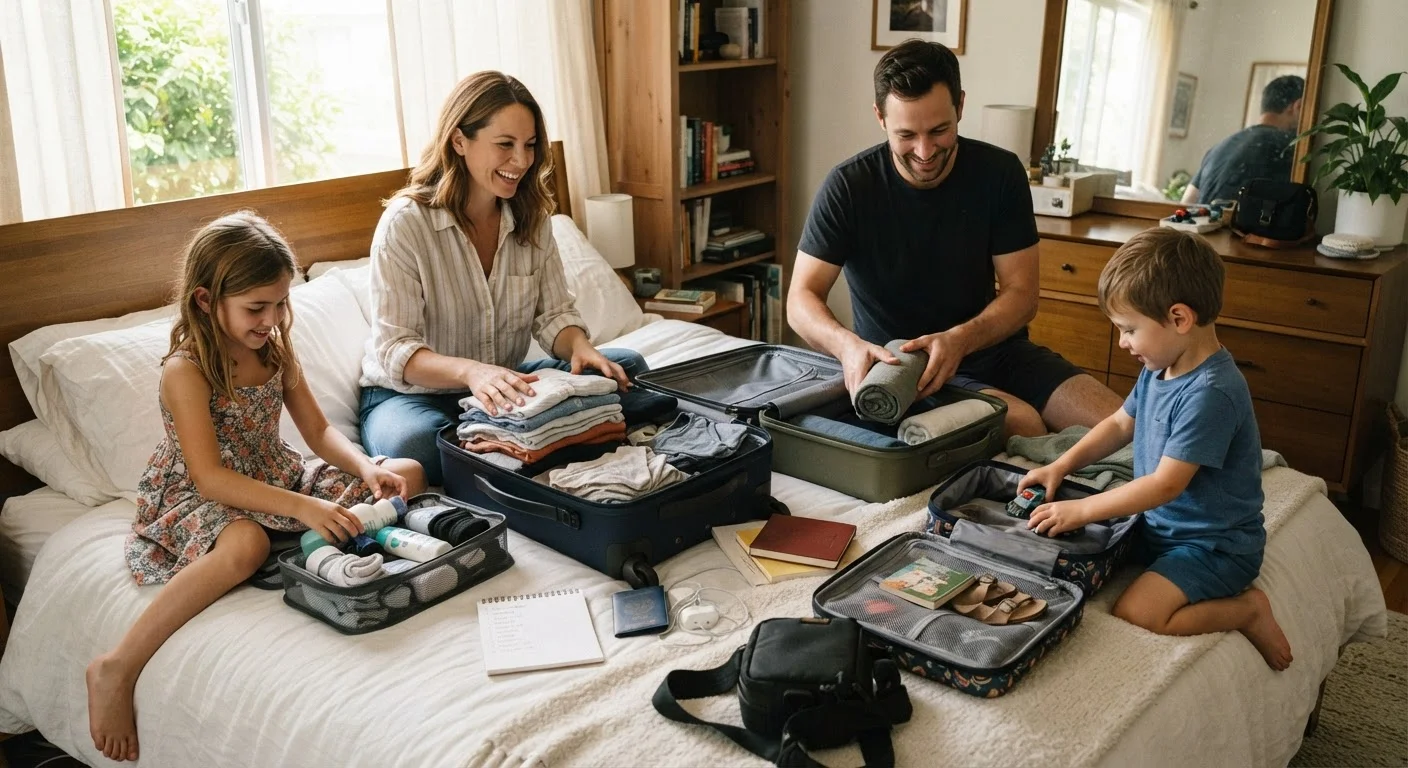
Assign each family member a packing zone. Older children can pack their own bag against a checklist, which builds independence and removes one task from the parent managing everything else. Younger children need a parent to pack for them, but keeping a dedicated small bag for each child reduces the scramble of finding their items mid-trip.
For toiletries and shared gear, use one clearly labeled bag that any family member can locate. This single habit eliminates the duplicate sunscreen bottles and multiple phone chargers that accumulate when everyone packs separately.
Traveling in shoulder season, when crowds thin and accommodation costs drop, pairs well with lighter packing since you are less likely to need gear for multiple weather extremes. The guide to shoulder season family travel explains how timing changes what you need to bring.