

Key Takeaways
Home weatherproofing
Weatherproofing is the process of sealing and insulating a home to reduce the movement of air, moisture, and heat through its envelope (the walls, roof, windows, doors, and foundation). The goal is to keep conditioned air inside and outdoor weather conditions outside. It covers everything from caulking a window gap to adding attic insulation.
Building scientists use the term 'building envelope' to describe the physical barrier between conditioned and unconditioned space. Weatherproofing addresses both air sealing and thermal resistance (R-value), which are related but distinct properties.
What weatherproofing actually covers
The term weatherproofing gets used loosely, so it helps to break it into concrete categories. At its simplest, it means reducing uncontrolled exchange between inside air and outside air. That exchange happens in two ways: air movement through gaps and cracks, and heat transfer through solid building materials.
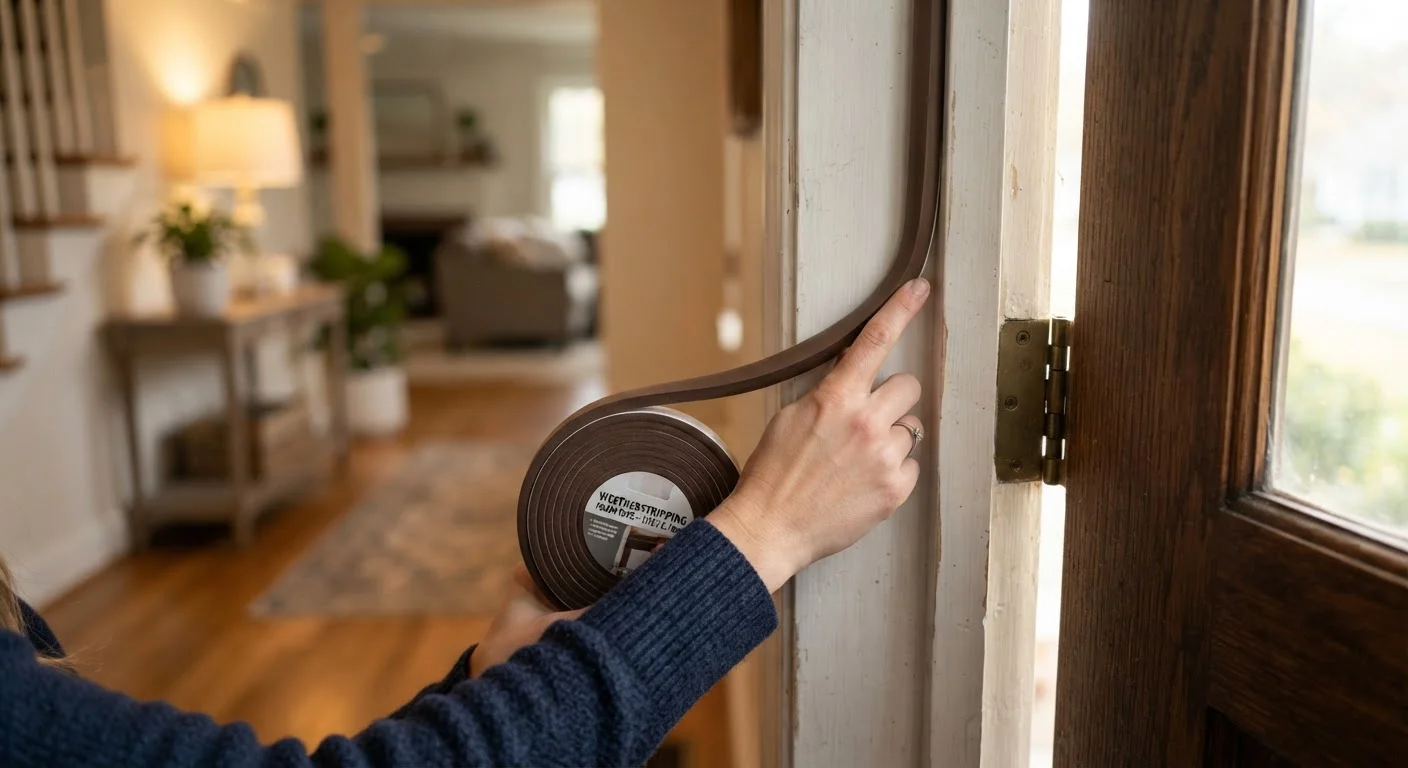
Air sealing addresses the first. Caulk, spray foam, and weatherstripping fill openings around windows, doors, pipes, wiring penetrations, and attic hatches. These are often the most cost-effective improvements in an older home because the materials are inexpensive and the labor is manageable for a careful DIYer. For a detailed look at which sealing material suits which gap, see our guide to caulk, foam, and weatherstripping.
Insulation addresses heat transfer. It sits in attic floors, wall cavities, and crawl spaces, slowing the rate at which heat moves through the building shell. Its effectiveness is measured by R-value: a higher number means greater resistance to heat flow. Local climate determines how much R-value is adequate, and the U.S. Department of Energy publishes zone-based recommendations that builders and auditors use as a reference.
Moisture management runs alongside both. When warm, humid air meets a cold surface inside a wall or attic, it can condense and create conditions for mold and rot. Proper vapor barriers and ventilation prevent that, and they belong in any complete weatherproofing plan.
Check moisture before sealing
Before adding caulk or spray foam to any area, check for signs of existing moisture: staining, soft wood, or efflorescence (white salt deposits on concrete). Sealing over a moisture problem traps water inside the assembly and can accelerate rot or mold. Address water intrusion before air sealing.
Where most homes lose the most energy
In a typical American home, the attic is the single largest source of heat loss in winter and heat gain in summer. Hot air rises and escapes through attic floors that lack adequate insulation; in summer, a poorly insulated attic absorbs heat that radiates down into living spaces. Adding or upgrading attic insulation is one of the higher-return projects available to most homeowners.
The second major problem is air leakage at the building envelope. The U.S. Department of Energy notes that drafts through gaps and cracks can account for a substantial share of heating and cooling costs in older homes. Common leak points include the sill plate (where the house frame meets the foundation), recessed light fixtures that penetrate the attic floor, plumbing and wiring chases, and the framing around attached garages.
Up to 30%
Heating and cooling energy savings potential
The U.S. Department of Energy estimates that homeowners can save up to 30% on heating and cooling costs through air sealing and insulation improvements.
25-40%
Share of heating energy lost through air leaks
According to the U.S. Department of Energy, air leaks account for 25 to 40 percent of energy used for heating and cooling in a typical home.
Top source
Attic as biggest heat loss zone
Energy auditors consistently identify the attic as the primary location for heat loss in winter and heat gain in summer in single-family American homes.
Windows and doors get the most attention in DIY weatherproofing guides, and they do matter, but they are rarely the largest problem. A single-pane window loses more heat than a double-pane, but fixing attic air leaks usually delivers more savings per dollar spent. That said, repairing failed caulk or replacing worn weatherstripping around doors is so inexpensive that it is worth doing regardless of how big the payoff is.
Starting with an energy audit
A home energy audit gives you a ranked list of where your specific home leaks, rather than a generic checklist. Many utility companies offer subsidized audits, and some offer them free. A trained auditor uses a blower door test (a calibrated fan mounted in an exterior door frame that depressurizes the house) to find and quantify air leaks, and an infrared camera to spot missing or settled insulation in walls and ceilings.
If a professional audit is not accessible right away, a rough self-assessment on a cold, windy day can identify obvious problems. Feel for drafts around electrical outlets on exterior walls, check for daylight visible around door frames, and look for frost or condensation patterns on interior walls in winter, which can indicate cold spots from missing insulation.
Once you have a sense of where the gaps are, prioritize by cost per impact. Attic air sealing and insulation typically come first. Door and window sealing usually comes next because the materials cost little. Wall insulation in an existing home is more invasive and expensive, so it generally makes sense only when major renovations are already planned. For context on avoiding common mistakes with insulation, the article on insulation myths is worth reading before you commit to a project.
When to bring in a licensed professional
Some weatherproofing work is genuinely DIY-accessible. Replacing a door sweep, caulking window frames, adding outlet gaskets behind cover plates, and installing new weatherstripping are all low-risk tasks with straightforward instructions and forgiving tolerances.
Other work calls for a licensed contractor. Spray foam insulation in wall cavities, work around the home's electrical or gas systems, any penetration into a finished wall, and crawl space or basement insulation often require permits and inspections under local building codes. Skipping permits on structural or mechanically adjacent work can create problems when you sell the home or file an insurance claim.
If you are unsure whether a project crosses that line, our overview of DIY vs. professional repair costs can help you think through the decision. The short version: if the work touches electrical, structural, or gas components, or if the municipality requires a permit, hire a licensed professional. A failed DIY attempt in those areas can cost more to fix than the original professional quote would have been.
Even when hiring out, it pays to understand what a contractor should be doing. Homeowners who understand the basics are better able to evaluate quotes, ask the right questions, and verify that work is complete.