

Key Takeaways
Why these myths keep circulating
Insulation is one of the most consistently misunderstood parts of a home. Unlike a leaking pipe or a broken appliance, poor insulation produces no obvious symptom beyond a higher utility bill, and even that gets blamed on other things. The result is that many families spend money based on assumptions that do not hold up.
Some of these beliefs come from outdated guidance. Insulation standards and climate-zone recommendations have been revised multiple times over the past few decades. Others come from contractor marketing that oversimplifies how building science works. And some are genuine misunderstandings about physics, such as the idea that insulation is a seasonal concern.
Getting insulation decisions right does not require an engineering degree, but it does require setting aside a few widely repeated claims. The myth-and-fact pairs below address the ones most likely to cost a household money.
Myth
Adding more insulation always means lower energy bills.
Fact
Beyond a certain point, additional insulation yields diminishing returns. The right amount depends on your climate zone, not just how much you can fit.
The U.S. Department of Energy assigns recommended R-values (a measure of thermal resistance) by climate zone. Homes in mild southern climates need far less attic insulation than homes in the upper Midwest. Doubling the insulation thickness in an already-well-insulated attic may provide only a marginal improvement in heat retention while adding significant cost. Matching the correct R-value to your zone is more effective than simply adding more material.
Myth
Insulation keeps a house warm in winter, but it does not do much in summer.
Fact
Insulation resists heat movement in both directions. It slows heat gain in summer just as it slows heat loss in winter.
Thermal resistance is not seasonal. In summer, insulation slows the transfer of outdoor heat into conditioned living spaces, reducing the load on air conditioning. Attic insulation is particularly useful here because attic temperatures can exceed 130 degrees Fahrenheit on hot days. Without adequate insulation, that heat radiates into rooms below and forces cooling systems to work harder.
Myth
If my house was insulated when it was built, it does not need attention now.
Fact
Insulation can settle, compress, or absorb moisture over time, reducing its effectiveness. Age alone does not guarantee performance.
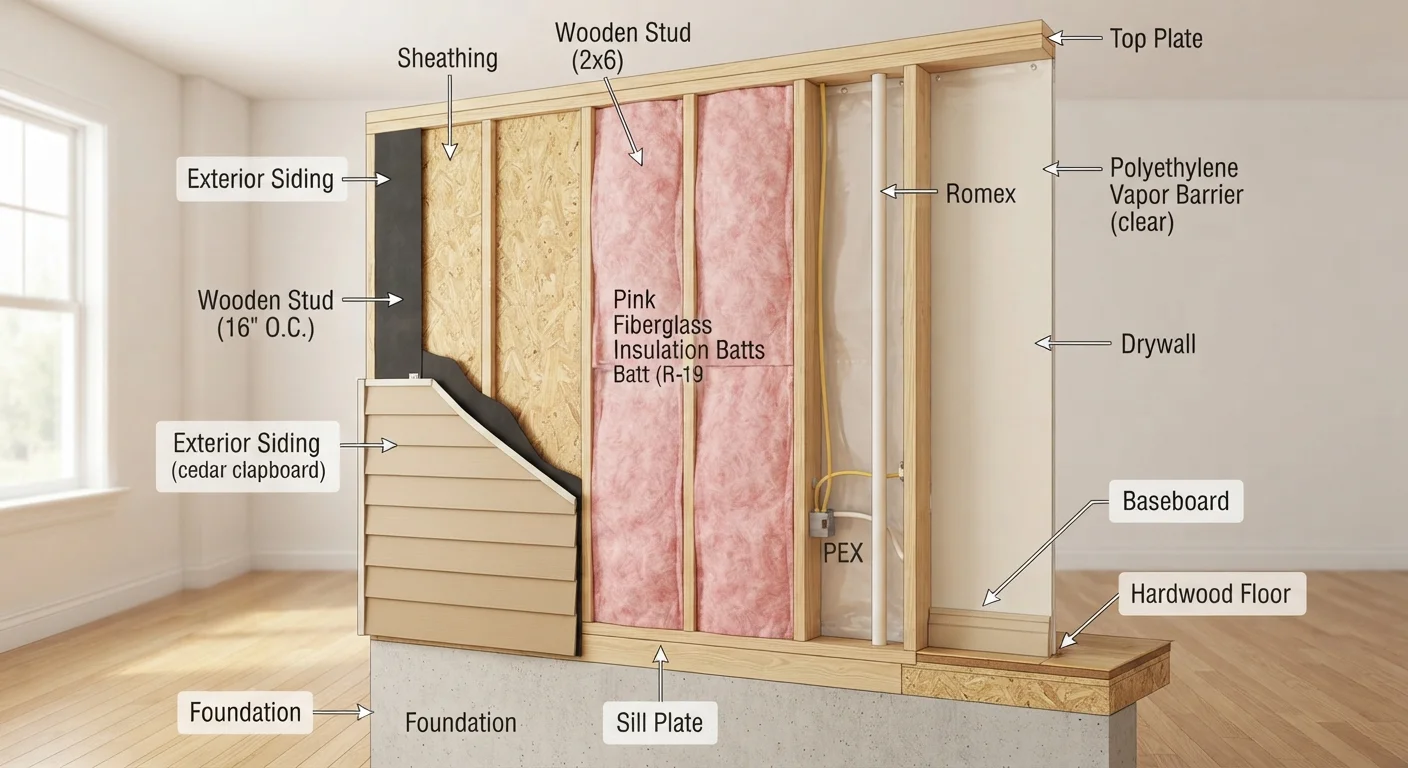
Loose-fill insulation, such as cellulose or blown fiberglass, settles gradually and can lose effective depth. Fiberglass batts that get wet from a roof leak or condensation may compress and harbor mold. A visual inspection by a qualified energy auditor can tell you whether existing insulation is still performing at its original rating or has degraded. Many homeowners discover significant gaps after a professional assessment, even in houses that appear well-maintained.
Myth
Insulation is only worth upgrading in the attic.
Fact
Crawl spaces, basement rim joists, and exterior walls are also common sites of significant heat loss.
The attic is often the highest-priority location because warm air rises and heat escapes upward most readily. However, crawl spaces and basement rim joists (the wooden band around the perimeter where floors meet the foundation) are frequent sources of cold air infiltration in winter. Uninsulated rim joists alone can account for a meaningful fraction of total heating loss in older homes. Wall insulation, while harder and more expensive to retrofit, matters in colder climates too. A full weatherproofing assessment helps identify which locations in your specific home offer the most return.
Myth
Spray foam insulation seals and insulates everything in one step, making other measures unnecessary.
Fact
Spray foam is effective at both air sealing and insulating, but it has limitations and is not always the right choice for every application.
Closed-cell spray foam has a high R-value per inch and creates an effective air barrier. However, it is among the more expensive insulation options, it requires professional installation, and it cannot easily be removed if repairs to wiring or plumbing are needed later. Open-cell spray foam is more affordable but has a lower R-value and can allow moisture vapor to pass through. In some locations, simpler solutions such as batt insulation combined with separate air sealing caulk or foam sealant provide comparable results at lower cost.
Myth
You can accurately gauge your insulation needs by touch or feel inside the house.
Fact
Surface temperature alone is an unreliable indicator of insulation depth, coverage, or condition.
A cold wall in winter might indicate poor insulation, but it could also reflect air infiltration, thermal bridging through studs, or simply the effect of wind on an exposed exterior. Conversely, a wall that feels warm may still have inadequate insulation if interior heating is compensating. A qualified energy auditor using blower door tests and thermal imaging cameras can identify actual gaps and weaknesses. Many utility companies offer free or reduced-cost audits, and persistent high energy bills are a practical signal that an audit is worth scheduling.
What to do before spending on insulation upgrades
Before committing to any insulation project, two steps tend to save the most money. The first is air sealing. Gaps around recessed lights, plumbing penetrations, attic hatches, and electrical outlets allow conditioned air to escape regardless of how much insulation surrounds them. Caulk and foam sealant address most of these gaps at low cost, and the payback is often faster than adding insulation on top of existing material.
The second step is an energy audit. Many utility companies provide them free or at a subsidized rate. An auditor measures your home's actual air leakage, inspects existing insulation, and identifies the locations where improvements will have the most impact. Without that information, upgrades are essentially guesswork.
Air sealing and insulation are not the same
Insulation slows heat transfer through materials, but it does not stop air from moving through gaps, cracks, or penetrations. A well-insulated wall with unsealed electrical outlets or duct penetrations can still lose significant heat. Address air sealing first, then layer in insulation upgrades for the best outcome.
Permits and professional involvement matter for some insulation work. Spray foam applied to unvented roof assemblies, for example, changes the moisture dynamics of the structure and should meet local building code requirements. If a project involves disturbing existing materials or modifying how the home handles vapor, check with your local building department before starting. For more on how insulation fits into the broader picture of reducing costs, see our guide on why energy bills stay high after upgrades.
Old insulation may contain hazardous materials
Vermiculite insulation installed before the 1990s may contain asbestos, and some older fiberglass batts were manufactured with materials that are now regulated. Before disturbing or removing existing insulation, have a qualified inspector assess it. Do not attempt removal yourself without professional guidance and proper protective equipment.