

Key Takeaways
Our Verdict
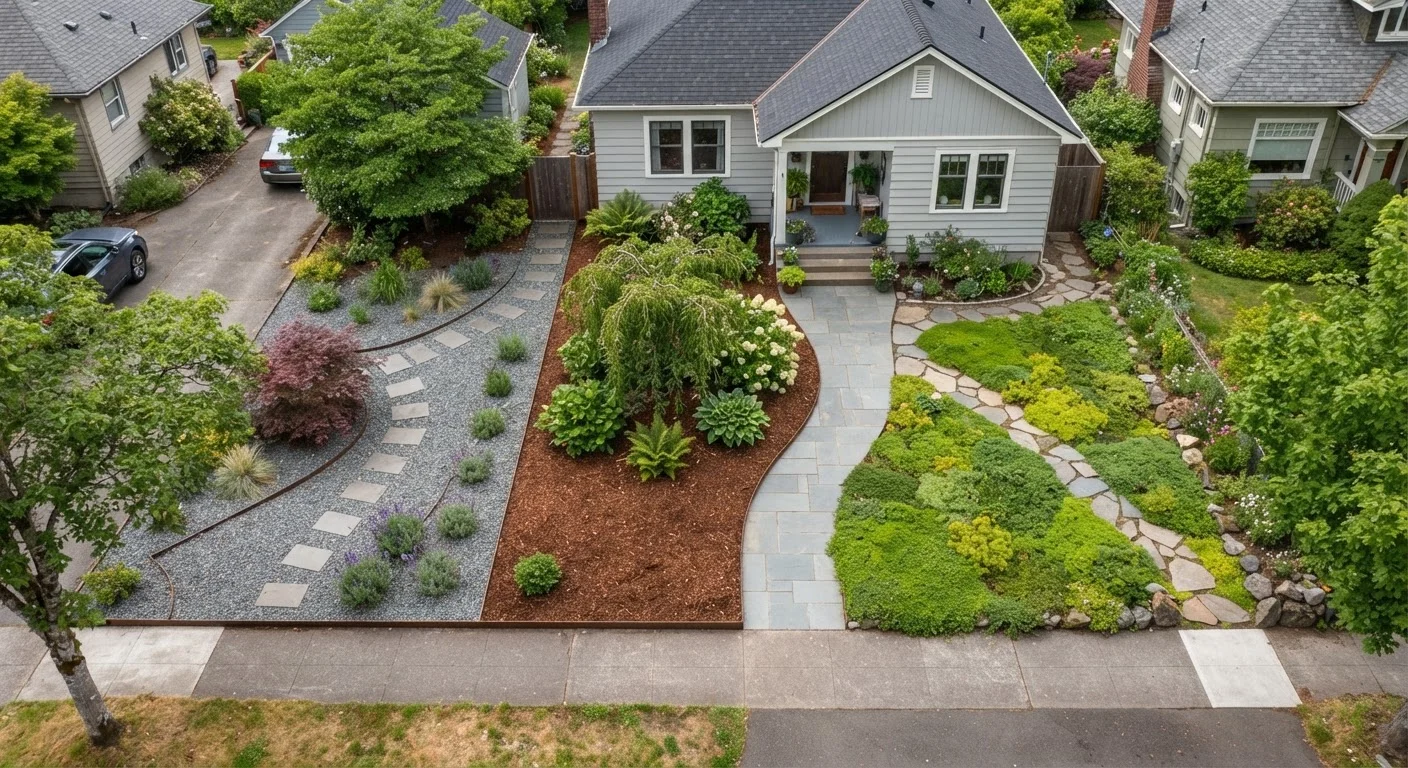
No single option beats the others in every situation. Gravel suits households that want a one-time installation they rarely touch. Mulch fits tight budgets with flat, shaded beds. Ground cover plants work best for slopes and areas where a living surface is preferred over time.
| Best for | Recommended |
|---|---|
| Homeowners who want near-zero ongoing maintenance | Gravel |
| Tight upfront budgets with small garden beds | Mulch |
| Sloped yards or erosion-prone areas | Ground cover plants |
| Families who want a green-looking yard without mowing | Ground cover plants |
Why homeowners are moving away from traditional grass
A standard cool-season grass lawn can consume thousands of gallons of water per year, plus fertilizer, herbicide, and regular mowing time. For families watching household costs, those inputs add up fast. Lawn alternatives shift some or all of that recurring expense into a one-time or infrequent investment.
The three options compared here, gravel, mulch, and ground cover plants, each carry different upfront costs, different labor demands, and different long-term trade-offs. Understanding those differences helps you match the right material to your yard's specific conditions rather than picking one based on looks alone.
Gravel: durable and low-effort after installation
Crushed stone, pea gravel, and decomposed granite are common choices for replacing grass in high-traffic paths, side yards, or drought-prone regions. Installation typically involves removing existing vegetation, laying weed barrier fabric, and spreading 2 to 3 inches of material. That work can cost $1.50 to $4 per square foot depending on stone type and your region, with larger orders usually bringing the per-unit price down.
Once in place, gravel needs little attention. Occasional raking and spot-weeding through any gaps in the fabric cover most of the maintenance. Gravel does not break down, so it does not need to be replaced the way organic materials do.
The main drawbacks: gravel retains heat, which can raise surface temperatures significantly in direct sun. It also tends to scatter into adjacent beds or onto paved areas, and it is difficult to remove if you change your mind. In regions with heavy rainfall, it can shift or develop low spots that pool water.
| Gravel | Mulch | Ground cover plants | |
|---|---|---|---|
| Upfront cost per sq ft | $1.50 to $4 | $0.50 to $1.50 | $0.75 to $3 (plants or seed) |
| Ongoing maintenance | Very low | Annual topping up needed | Low once established |
| Weed control | Good with fabric barrier | Moderate | Good when fully filled in |
| Works on slopes | Poor | Poor | Good |
| Soil health impact | Neutral to negative | Positive over time | Positive |
| Time to full coverage | Immediate | Immediate | 1 to 2 seasons |
| Heat retention | High in sun | Low | Low |
Mulch: the low-barrier starting point
Wood chip mulch, shredded bark, and pine straw are widely available and relatively cheap per cubic yard. A 2- to 3-inch layer suppresses weeds, retains soil moisture, and moderates soil temperature. Many municipalities offer free or low-cost wood chip mulch through tree-trimming programs, which can reduce material cost to almost nothing.
The trade-off is longevity. Organic mulch decomposes and needs to be topped up roughly every one to two years. In wet climates, some types can mat and block water penetration, or develop surface mold. Dyed mulches often fade within a season.
Mulch works particularly well under trees and in garden beds where soil health matters, since decomposing organic matter gradually feeds the soil. It is less practical as a full lawn replacement in open, sunny areas where foot traffic would scatter it quickly.
Check for free mulch in your area
Many county and city tree services offer free wood chip mulch to residents, since it saves them disposal costs. Search your county's public works or parks department website, or ask a local tree trimming crew if they will drop a load at your address. The material may be coarser than bagged products, but it works well as a base layer under beds or paths.
Ground cover plants: long-term value with a slower payoff
Creeping thyme, clover, buffalo grass, ajuga, and similar low-growing plants can replace turf grass in many climates. Once established, most need little watering, no mowing, and minimal fertilizer. Some, like clover, fix nitrogen in the soil, reducing the need for any added nutrients.
The catch is the establishment period. Most ground covers take one to two full growing seasons to fill in enough to crowd out weeds reliably. During that window, hand weeding or mulching between plants is needed. Plugs or small plants from a nursery cost more upfront than seed, but they fill in faster.
If you already grow vegetables or flowers, combining ground covers with other low-input plantings can stretch the value further. For perennial options that work well alongside ground covers, see low-maintenance perennials for American home gardens. For families interested in growing more from seed, seed starting on a budget covers how to get plants started cheaply without special equipment.
Matching the right option to your conditions
Slope matters more than most homeowners expect. Gravel on a slope can migrate downhill in rain. Mulch washes easily. Ground cover plants with root systems hold soil in place and become more practical on any grade steeper than about 10 percent.
Shade and water access also influence the choice. Mulch performs well in shaded beds where plants struggle. Gravel in shade stays cooler and tends to stay in place better than in sunny areas. Ground covers vary widely: some thrive in deep shade, others need full sun.
If your yard is small or you do not own the property, container gardens may make more sense than any ground-level installation. Container gardening for renters and small yards covers practical options that require no permanent changes to the ground.
Before starting any installation, check whether your municipality or HOA has rules about lawn alternatives, particularly gravel or hardscape coverage percentages. Some areas restrict how much of a front yard can be non-permeable surface.