

| Cell turnover in your 20s | Approximately every 28 days (General dermatological reference range) |
| Cell turnover in your 50s | Approximately every 45 to 60 days (General dermatological reference range) |
| Leading external skin-aging factor | UV radiation (photoaging) (American Academy of Dermatology) |
| SPF recommendation | Broad-spectrum SPF 30 or higher, daily (American Academy of Dermatology) |
| Most evidence-supported anti-aging ingredient | Retinoids (vitamin A derivatives) (Multiple peer-reviewed dermatology studies) |
| Barrier-supporting ingredient category | Ceramides (General cosmetic science consensus) |
Why skin changes decade by decade
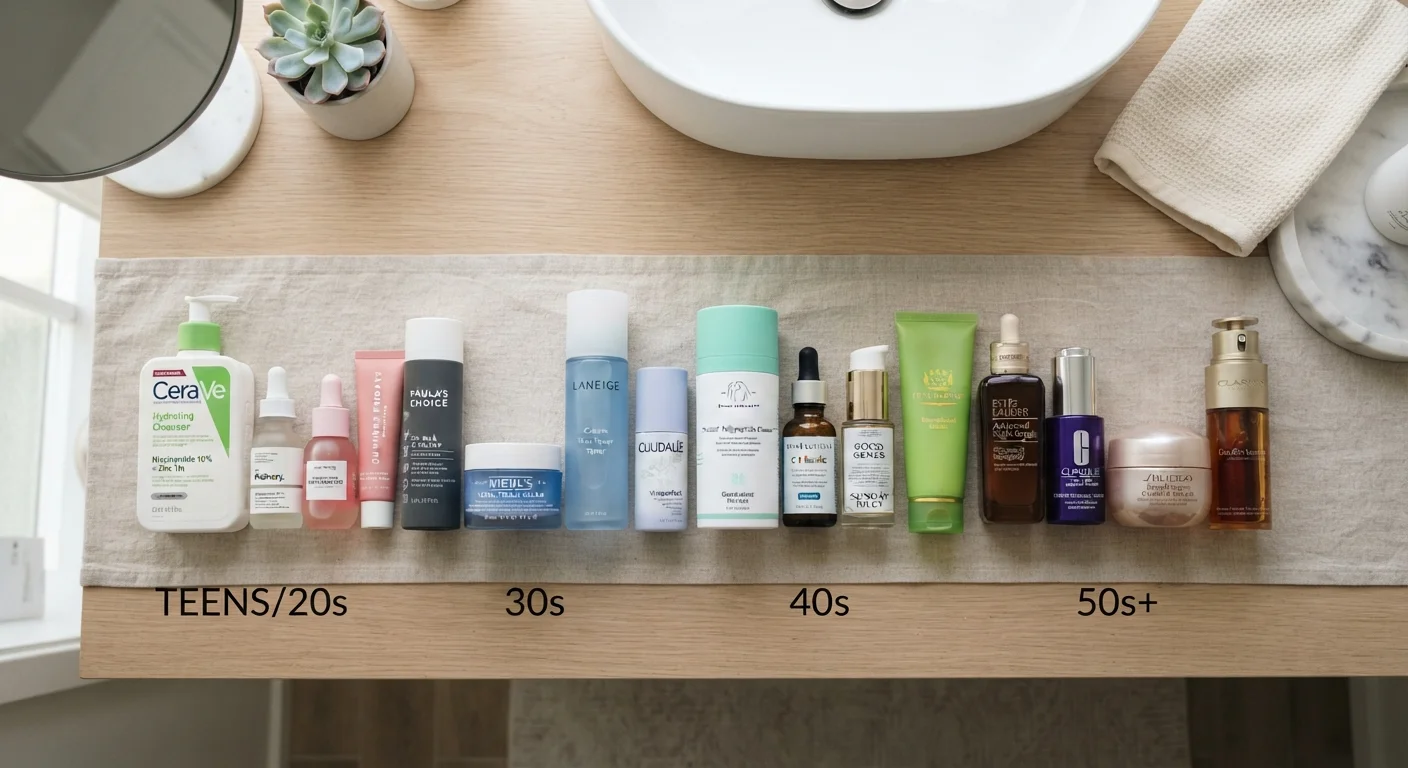
Skin is not static. It cycles through predictable biological shifts tied to hormones, collagen production, cell turnover rate, and cumulative sun exposure. Understanding those shifts helps you spend money only on what your skin actually needs at a given stage, rather than chasing a universal routine that may not fit.
Cell turnover, the process by which fresh skin cells replace older ones, slows gradually with age. In your twenties, the cycle runs roughly every 28 days. By your fifties, it can take twice as long. That single change affects how skin looks, how products absorb, and which ingredients deliver noticeable results.
| Cell turnover in your 20s | Approximately every 28 days (General dermatological reference range) |
| Cell turnover in your 50s | Approximately every 45 to 60 days (General dermatological reference range) |
| Leading external skin-aging factor | UV radiation (photoaging) (American Academy of Dermatology) |
| SPF recommendation | Broad-spectrum SPF 30 or higher, daily (American Academy of Dermatology) |
| Most evidence-supported anti-aging ingredient | Retinoids (vitamin A derivatives) (Multiple peer-reviewed dermatology studies) |
| Barrier-supporting ingredient category | Ceramides (General cosmetic science consensus) |
For a primer on reading product labels before shopping any of these ingredient categories, see how to read a skincare ingredient list.
Teens and twenties: prevention is the foundation
During the teens and early twenties, sebaceous glands are typically more active, making excess oil and clogged pores common concerns. A gentle, non-stripping cleanser and a lightweight, non-comedogenic (non-pore-blocking) moisturizer cover most needs without overwhelming the skin barrier.
The most consequential habit at this stage is daily broad-spectrum SPF use. UV radiation is the single largest external contributor to visible skin aging, and protection started early has a compounding effect over decades. A simple mineral or chemical sunscreen worn every morning is more useful than any serum at this life stage. For a detailed look at sunscreen formats and costs, compare SPF moisturizers to dedicated sunscreens.
Spot treatments containing salicylic acid (a beta-hydroxy acid that dissolves inside pores) or benzoyl peroxide can address occasional breakouts without requiring a full acne regimen. Both are widely available at drugstores at low price points.
Thirties: early maintenance without the overhaul
In the thirties, collagen synthesis begins a gradual decline, and fine lines around expressive areas like the eyes and mouth may become more visible. Cell turnover slows slightly, which can leave skin looking less even-toned over time.
Retinoids, vitamin A derivatives that signal the skin to produce collagen and speed up cell turnover, are among the most evidence-supported ingredients for this decade. Over-the-counter retinol is a gentler starting point than prescription tretinoin. Introducing it two to three nights per week helps skin adjust before building frequency. Pairing retinol with a good moisturizer on the same nights can reduce initial dryness.
Antioxidants, particularly vitamin C (ascorbic acid), help neutralize free radicals generated by UV exposure and pollution. A vitamin C serum in the morning under sunscreen is a pairing with real evidence behind it. Affordable active ingredients available at the drugstore can cover both categories without a significant budget increase.
Forties and fifties: hydration and barrier repair
Estrogen levels shift significantly during perimenopause and menopause, which often spans the forties and fifties. Lower estrogen is linked to reduced skin moisture, thinner skin, and a more pronounced loss of elasticity. The skin barrier, which is the outermost layer that keeps water in and irritants out, becomes less efficient.
Hyaluronic acid (a water-attracting molecule naturally present in skin) applied topically in serum or moisturizer form can temporarily plump the surface. Ceramides, lipid molecules that help seal the skin barrier, appear in many moisturizers at accessible price points and directly address the barrier disruption common at this stage.
Exfoliation with a low-concentration alpha-hydroxy acid (AHA) like glycolic or lactic acid a few times per week can improve the look of uneven texture and dull tone by clearing away the slower-shedding dead cells. Starting with a low percentage reduces the risk of irritation.
This article is for general informational purposes only and does not constitute medical or dermatological advice. Consult a qualified healthcare or skincare professional for concerns about your individual skin health.
Sixties and beyond: gentleness and consistency
Skin in the sixties and older tends to be noticeably thinner, drier, and more sensitive, partly because oil gland activity continues to decline and the barrier weakens further. Harsh exfoliants, drying alcohols in toners, and strong fragrance can tip already-sensitive skin into irritation cycles that are slow to resolve.
A short, consistent routine generally performs better than a complicated one. A gentle low-lather cleanser, a rich barrier-supporting moisturizer with ceramides or shea butter, and daily SPF cover the fundamentals. Retinol can still be useful for texture and tone at lower concentrations, though anyone on medications that affect skin should check with their doctor before introducing active ingredients.
The broader point across all decades: layering products does not always mean better results. Choosing two or three evidence-backed steps and using them consistently outperforms a ten-step routine applied sporadically. That approach is also easier on the budget.