

Key Takeaways
Option A
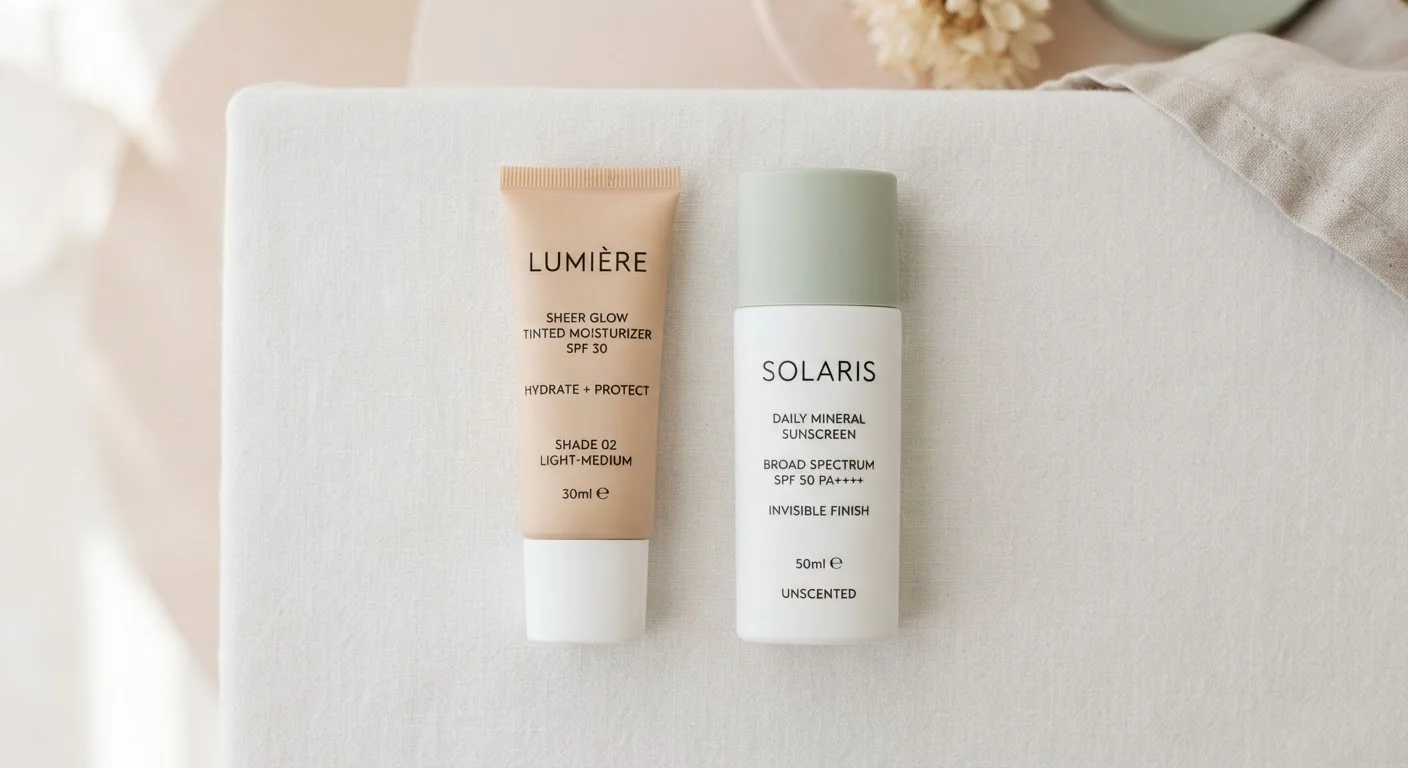
SPF moisturizer
The convenient, multi-tasking daily option.
Best for: People who want a streamlined morning routine with fewer steps and lighter texture.
Option B
Dedicated sunscreen
The straightforward, protection-first choice.
Best for: Anyone spending extended time outdoors or needing reliable, consistent UV defense.
If your sun exposure is mostly incidental (commuting, running errands)
SPF moisturizer
A well-formulated SPF moisturizer with at least SPF 30 is generally adequate for brief, everyday exposure while keeping your routine simple.
If you spend significant time outdoors or near water
Dedicated sunscreen
Standalone sunscreens, especially water-resistant formulas, are designed and tested for sustained outdoor use and tend to hold up better under those conditions.
If you have oily or acne-prone skin and resist heavy products
Dedicated sunscreen
Many modern sunscreens come in lightweight, gel, or fluid formulas that sit comfortably on oily skin without adding extra moisturizing ingredients that may feel heavy.
If you are working within a tight skincare budget
SPF moisturizer
Combining moisturizer and sun protection into one product can reduce the total number of items you need to buy, which helps stretch a limited budget further.
How SPF actually gets into a moisturizer
An SPF moisturizer is a standard hydrating formula with UV-filtering ingredients added during manufacturing. The same chemical filters (such as avobenzone or oxybenzone) or mineral filters (zinc oxide, titanium dioxide) used in standalone sunscreens appear in these hybrid products. The difference is concentration and formula priority: a moisturizer is built first around skin hydration, with SPF as a secondary function. A dedicated sunscreen does the opposite.
The FDA regulates sunscreen claims on both product types under the same Over-the-Counter monograph rules. Any product sold in the US with an SPF number must meet the same broad-spectrum testing standards, regardless of whether it also moisturizes. That is good news for consumers: the SPF number on a moisturizer is not a marketing guess. It is a tested figure, though with an important catch covered below.
For a broader look at what active ingredients in affordable formulas actually do, see our guide to drugstore skincare ingredients.
The application gap: why real-world protection often falls short
| Criterion | SPF moisturizer | Dedicated sunscreen |
|---|---|---|
| Primary purpose | Hydration with added SPF | UV protection |
| Typical SPF range | SPF 15 to SPF 50 | SPF 15 to SPF 100+ |
| Water resistance option | Rarely available | Widely available |
| Application precision | Applied by feel | Applied by measured amount |
| Routine steps | One product replaces two | Requires separate moisturizer |
| Texture options | Typically cream or lotion | Cream, gel, fluid, spray |
| Typical drugstore price | Similar range to sunscreen | Similar range to SPF moisturizer |
SPF ratings in lab tests are established using 2 mg of product per square centimeter of skin. For the face alone, that works out to roughly a quarter teaspoon of sunscreen. Most people apply about half that amount, which can drop an SPF 50 product to an effective SPF closer to 12, according to published dermatology research on consumer application behavior.
This problem applies to both formats, but it is more likely to matter with SPF moisturizers. People tend to apply moisturizer by feel, stopping when skin feels hydrated rather than when a precise dose has been used. With a dedicated sunscreen, the application purpose is explicit, and users are slightly more likely to apply a deliberate, measurable amount.
People with darker skin tones sometimes skip sunscreen on the assumption that natural melanin offers sufficient protection. Melanin does provide some UV defense, but dermatologists broadly recommend SPF protection for all skin tones to reduce cumulative UV damage over time. This is general information and not personal medical advice; anyone with specific skin concerns should consult a dermatologist.
Texture, wearability, and daily use
SPF moisturizers generally feel lighter on the skin than many traditional sunscreen formulas because their base is designed for comfort and absorption. For dry skin types, this can be a real advantage: one product handles hydration and protection simultaneously, cutting both time and spending.
Dedicated sunscreens have improved considerably in texture. Fluid, gel, and lightweight lotion formats now exist at accessible price points, so the old complaint about sunscreen feeling heavy or leaving a white cast is less true across the board, particularly for chemical-filter formulas. Mineral sunscreens (zinc and titanium) can still leave a visible white residue on deeper skin tones, so formula choice matters here. Understanding label language can also help when comparing ingredient lists across both formats.
For families managing multiple skin types, a dedicated sunscreen applied after a separate moisturizer gives more control over each product's dose. That flexibility is harder to achieve when both functions come from one product.
Cost comparison and practical value
At the drugstore level, SPF moisturizers and dedicated sunscreens often sit in a similar price range. A combined product can reduce the total number of items in a routine, which matters when budgeting for a household. However, sunscreens require more frequent reapplication outdoors (the general guidance is every two hours), meaning the per-use cost of a dedicated sunscreen can add up faster than a moisturizer used only once each morning.
One way to manage cost without sacrificing protection: use a dedicated SPF 30 or higher sunscreen on the face and neck daily, and reserve SPF moisturizers for days when sun exposure is genuinely minimal, such as entirely indoor days with brief window exposure only. Skin care needs also shift with age, and sun protection remains relevant across every decade of life.
This article provides general skincare information and is not a substitute for professional dermatological advice. Consult a qualified healthcare provider for personal skin concerns.