

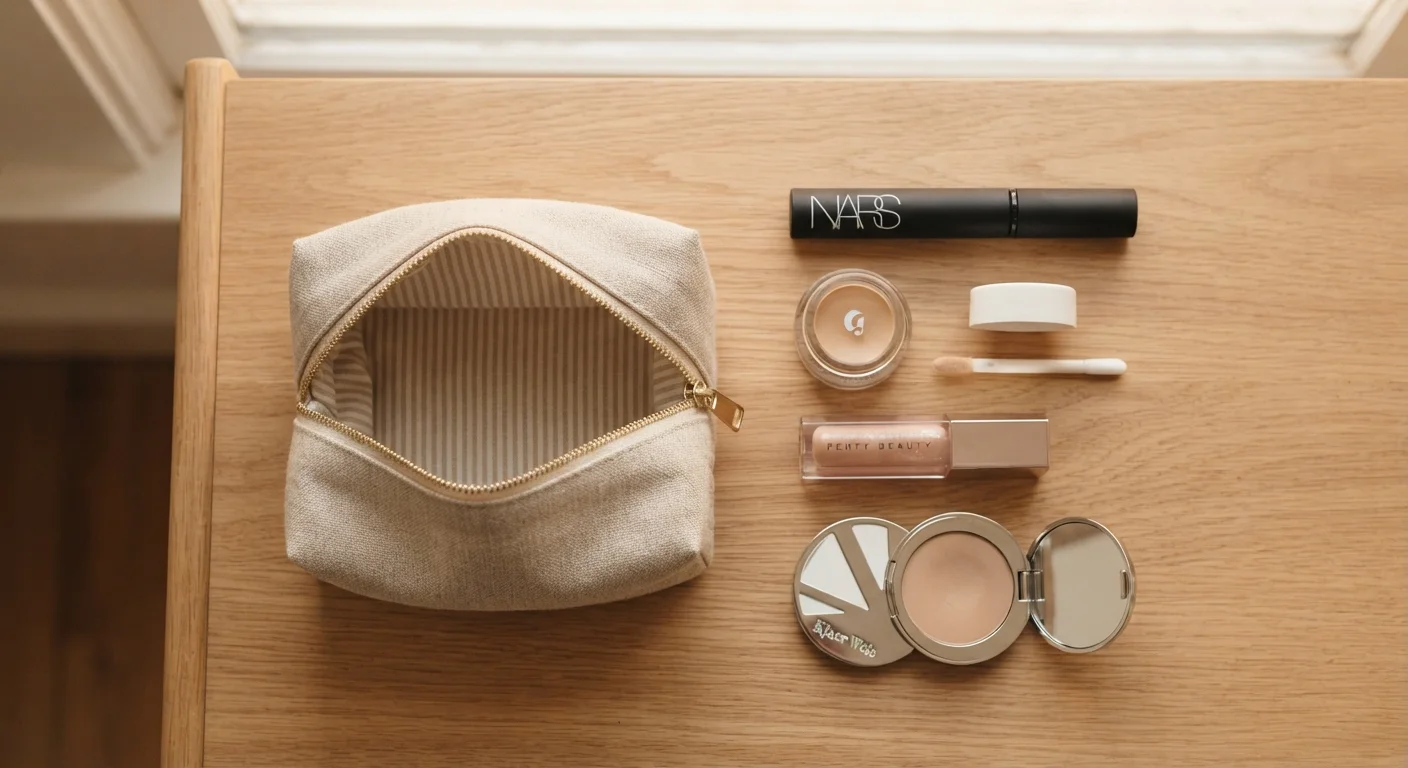
Key Takeaways
What a capsule makeup bag actually means
The capsule concept, familiar from clothing minimalism (see how families apply it to wardrobes), works just as well for makeup. The idea is a small, deliberate collection where every product earns its place by covering multiple uses or looks. Nothing sits unused for months. Nothing duplicates another item already in the bag.
For a tight budget, the benefit is practical: fewer products means fewer dollars spent, less waste when something expires before you finish it, and a faster morning routine. A typical capsule makeup bag holds somewhere between six and ten products total, depending on your skin type and how much coverage you prefer on a given day.
Before you buy anything: audit what you have
Pull everything out of your current makeup storage and check expiration dates. Mascara and liquid eyeliner typically last three to six months once opened. Liquid foundations and concealers run about twelve months. Powders and eyeshadows can last two years or more when kept dry and clean.
Discard anything past its safe use period, then group what remains by category: complexion, eyes, lips, tools. You may find you already own most of what a capsule bag needs. This step alone can save you from spending on replacements you do not actually need yet.
Photograph your audit before putting things away
A quick photo of your sorted products gives you a reference you can check while shopping. You will know exactly what you have, what shade it is, and whether you are about to buy a duplicate. This takes thirty seconds and has saved many shoppers from redundant purchases.
The core products to include
A functional capsule bag for everyday wear generally covers four categories.
Complexion
One tinted moisturizer or light-coverage foundation handles uneven tone without feeling heavy. Pair it with a concealer one shade lighter than your skin to address any spots or under-eye circles. A translucent setting powder keeps both in place and costs little at the drugstore.
Eyes and brows
A single mascara and a dual-ended brow product (pencil on one end, spoolie on the other) cover most everyday eye looks. If you want to add definition, a neutral matte eyeshadow in a mid-tone brown works across lid, crease, and lower lash line without needing an entire palette.
Cheeks
A cream blush doubles as an eyeshadow and, on lighter skin tones, as a subtle lip tint. One product covering three uses is exactly the kind of efficiency a capsule bag depends on.
Lips
A tinted lip balm in a universally flattering berry or nude gives color and moisture in one step. On days you want more, a lip liner in a close-to-your-natural-lip shade makes the tint look more deliberate without adding a separate lipstick.
How to build it without overspending
Replace one category at a time rather than restocking everything in a single shopping trip. Start with complexion products because they affect how much of everything else you use. Good skin prep (a moisturizer with SPF applied before any makeup) reduces the amount of coverage product you need, which directly extends how long that product lasts.
Drugstore formulas for mascara, setting powder, and tinted lip balm are widely considered solid performers by makeup artists who work across budget levels. You do not need to spend more to get reliable everyday results in those categories.
Packing light for travel follows the same logic: a capsule bag fits easily into carry-on luggage. The smart packing guide for family travel covers how to reduce what you bring across every category, not just beauty.
Empty and sort your current makeup
Remove everything from your current storage. Check each product for its period-after-opening symbol (a small open jar icon with a number) and discard anything expired. Group survivors by category: complexion, eyes, brows, lips, cheeks, tools.
Identify the gaps
Write down which of the four core categories (complexion, eyes and brows, cheeks, lips) you have nothing usable for. These are your actual shopping needs. Everything else you already own can stay in rotation.
Set a per-category spending limit
Assign a dollar amount to each gap on your list before you shop. This prevents in-store upsells from inflating your total. Complexion products often cost more than lip or eye items, so weight your budget accordingly.
Choose products with more than one use
For each gap, look specifically for items that cover two functions: a cream blush that doubles as eye color, a tinted moisturizer that includes SPF, a brow product with a built-in spoolie. Multi-use items stretch your budget across several categories at once.
Test texture and shade before committing
If shopping in a physical store, test concealer and foundation shades on your jaw, not your wrist. Jaw color is closer to your neck and chest, which makes matching more accurate. Allow the product a minute to oxidize (change slightly after contact with air) before judging the shade.
Replace one category at a time going forward
Once your initial capsule bag is built, replace products only as they run out or expire. Resist restocking everything at once when a sale appears. Buying a replacement before you need it means spending money sooner and risking the product expiring before you finish it.
Keeping costs low over time
Clean brushes and sponges regularly. Product buildup makes tools apply unevenly, which leads to using more product than necessary. A gentle dish soap or baby shampoo works fine for weekly cleaning.
Store products away from humidity and direct sunlight. Heat and moisture shorten the life of foundations and cream products noticeably. A small zip pouch kept in a cool drawer costs almost nothing and extends the usable life of everything inside it.
The same discipline that makes a grocery budget work (buying only what you will actually use before it goes bad) applies here. The principles behind eating well on a tight grocery budget translate surprisingly well to any category where waste is the main cost driver.