

Key Takeaways
Glycemic index (GI)
The glycemic index is a scale from 0 to 100 that measures how quickly a carbohydrate-containing food raises blood sugar levels after eating. Foods rated 55 or below are considered low GI, 56 to 69 are medium, and 70 or above are high GI. Pure glucose is used as the reference point and assigned a value of 100.
GI values are measured under controlled laboratory conditions using a specific serving amount that delivers 50 grams of available carbohydrates, so real-world effects can vary based on portion size, food preparation, and individual metabolism.
What the glycemic index actually measures
Every carbohydrate food you eat is broken down into glucose, which enters the bloodstream and raises blood sugar. The glycemic index captures how fast that rise happens compared to pure glucose. A food with a GI of 30 raises blood sugar slowly and modestly. A food with a GI of 85 raises it quickly and steeply.
The number itself comes from feeding a measured portion of a food to test subjects and tracking their blood glucose over two hours. The result is averaged and expressed as a percentage of the glucose response. That is the GI score.
Fiber, fat, protein, and acid content all slow digestion, which is why most whole, minimally processed foods land in the low-to-medium range. White bread, which has very little fiber, digests rapidly and scores around 73. A can of chickpeas scores around 28.
Why GI values shift depending on how food is prepared
The GI of a food is not fixed. Several factors change how quickly starch is digested, and understanding them helps at the grocery store and in the kitchen.
- Cooking method: pasta cooked firm (al dente) has a lower GI than pasta cooked soft, because heat and water break down starch granules over time.
- Ripeness: a ripe banana has a notably higher GI than an unripe one, as starch converts to sugar during ripening.
- Cooling after cooking: cooked and cooled potatoes or rice form resistant starch, which is digested more slowly, lowering the effective GI.
- Processing: rolled oats have a lower GI than instant oats because instant oats are pre-cooked and milled more finely.
These shifts matter for everyday cooking. Choosing less-processed versions of staple foods, and avoiding overcooking starchy items, can keep GI values lower without any extra cost.
A simple rule for grains at the store
When comparing grain products, look at the fiber content on the nutrition label rather than searching for a GI number. Products with 3 or more grams of fiber per serving tend to fall in the low-to-medium GI range. This works for bread, cereals, rice blends, and pasta without needing any specialized knowledge.
Low-GI foods that work on a grocery budget
A common assumption is that eating by GI principles requires specialty products. It does not. Some of the most affordable items at any grocery store are naturally low on the scale.
28
GI score of canned chickpeas
Chickpeas are classified as a low-GI food according to published GI databases used in clinical nutrition research.
55 or below
GI threshold for low-GI classification
The internationally recognized GI classification system, developed at the University of Sydney, defines low GI as 55 or below, medium as 56 to 69, and high as 70 or above.
Around 73
GI score of white bread
White bread ranks as a high-GI food in published glycemic index tables, primarily because it is low in fiber and made from refined flour.
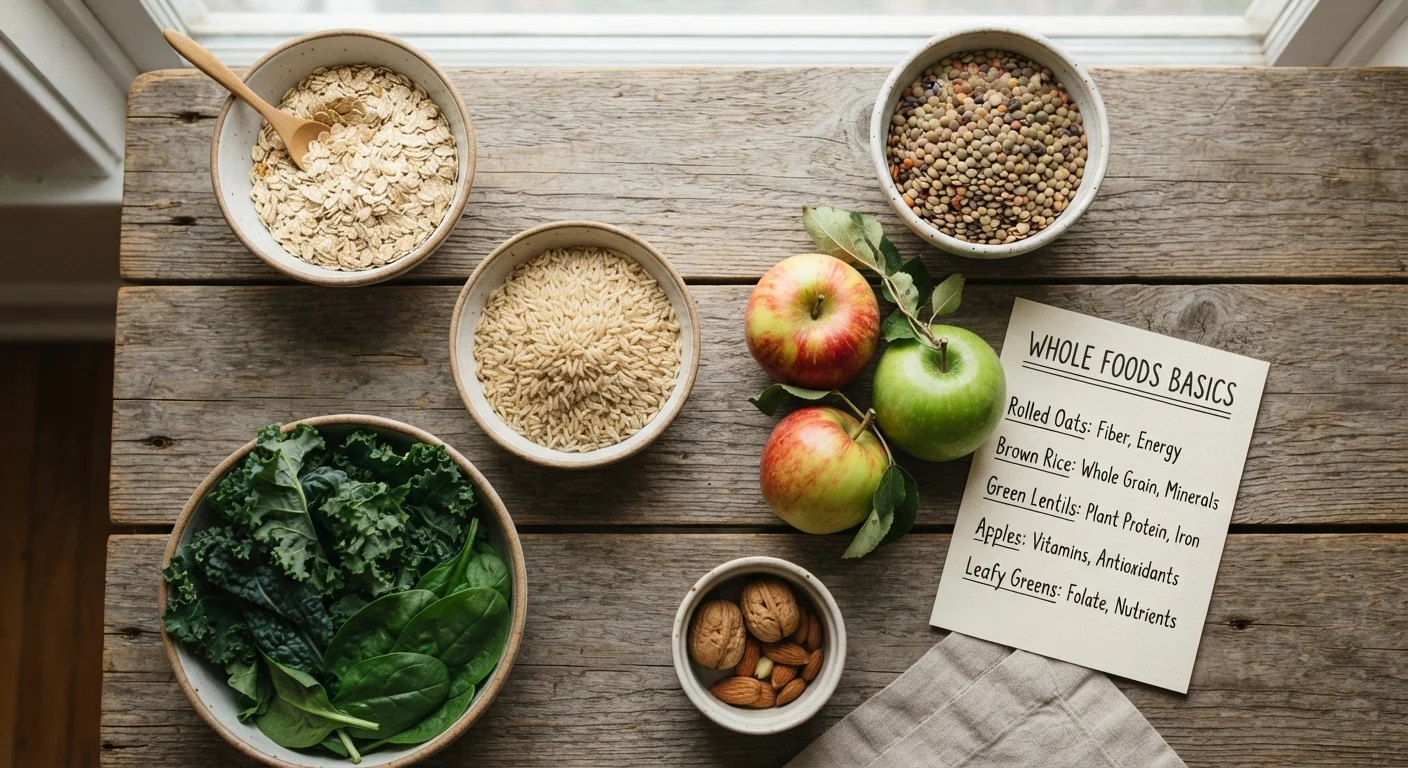
Dried lentils and canned beans (black beans, kidney beans, chickpeas) consistently score below 40 and cost very little per serving. Rolled oats, barley, and bulgur wheat are whole grains with low-to-medium GI values and wide availability. Non-starchy vegetables such as broccoli, cabbage, spinach, and green beans have negligible effects on blood sugar and are cheap year-round, especially frozen.
Brown rice scores modestly higher than some other whole grains (around 50 to 55), but it is still a reasonable choice compared to white rice (around 72). Whole-grain bread varies widely by brand, so checking fiber content per slice is a reliable shortcut when GI data is not on the label.
Mixing foods to manage blood sugar response
Eating carbohydrates alone tends to produce a faster blood sugar rise than eating the same carbohydrates as part of a mixed meal. Adding protein, fat, or fiber to a meal slows gastric emptying and blunts the glucose response.
This is practical news for families working with a limited food budget. A bowl of white rice eaten alone has a high glycemic impact. The same rice served with black beans, a small portion of oil-dressed vegetables, and a piece of chicken produces a much more moderate response, because the combined meal is digested more slowly.
This also means that a single high-GI food on a shopping list is not automatically a problem. Context matters. Bread, for example, is usually eaten with eggs, nut butter, or avocado, all of which modify the effective glycemic response.
What GI does not tell you
The glycemic index is a useful reference, but it has clear limits. It measures only the blood sugar response to carbohydrates. A food can have a low GI and still be high in saturated fat, sodium, or added sugar. Chocolate has a moderate GI because its fat content slows digestion, but that does not make it a nutritional standout.
Glycemic load (GL) is a related figure that adjusts GI by accounting for actual serving size. Watermelon has a high GI (around 76) but a low GL because a typical serving contains very little carbohydrate. For day-to-day shopping decisions, most nutrition professionals suggest using GI as one reference point alongside fiber content, ingredient lists, and overall eating patterns rather than as a single deciding factor.
Just as reading an ingredient label takes practice (see how that applies in a different context with our guide to reading ingredient lists), reading food through the lens of GI gets easier with familiarity. Over time, the general categories become intuitive: most whole foods are low, most ultra-processed foods are high, and most mixed meals land somewhere in between.
This article is for general informational purposes only and is not medical or dietary advice. Consult a registered dietitian or qualified healthcare professional for guidance specific to your health needs.