

Key Takeaways
Why low-cost activities often hit harder than pricey ones
Families frequently return from expensive theme parks with stories about the pool at the hotel or the random roadside turtle they spotted on the drive over. The paid spectacle rarely beats the unplanned moment. That pattern is worth building a strategy around.
When you deliberately budget travel around free and low-cost activities, you accomplish two things at once. You hold more cash in reserve for the one or two genuinely special experiences you do want, and you give kids time to actually explore rather than rush a queue. The ideas below work across a wide range of U.S. destinations and age groups. For broader context on how these choices fit into a complete trip plan, see planning your first frugal family vacation.
Junior ranger programs at national parks
The National Park Service runs junior ranger programs at hundreds of parks across the country. Kids pick up a free or very low-cost activity booklet at the visitor center, complete nature-based tasks along the trails, and earn an official badge or certificate at the end. The programs are self-paced, so families move at their own speed rather than following a fixed tour schedule.
Park entrance fees vary, and some parks participate in fee-free days throughout the year. Check the National Park Service website for current schedules before you travel. Many state parks run similar programs independent of the federal system, often at lower or no entry cost.
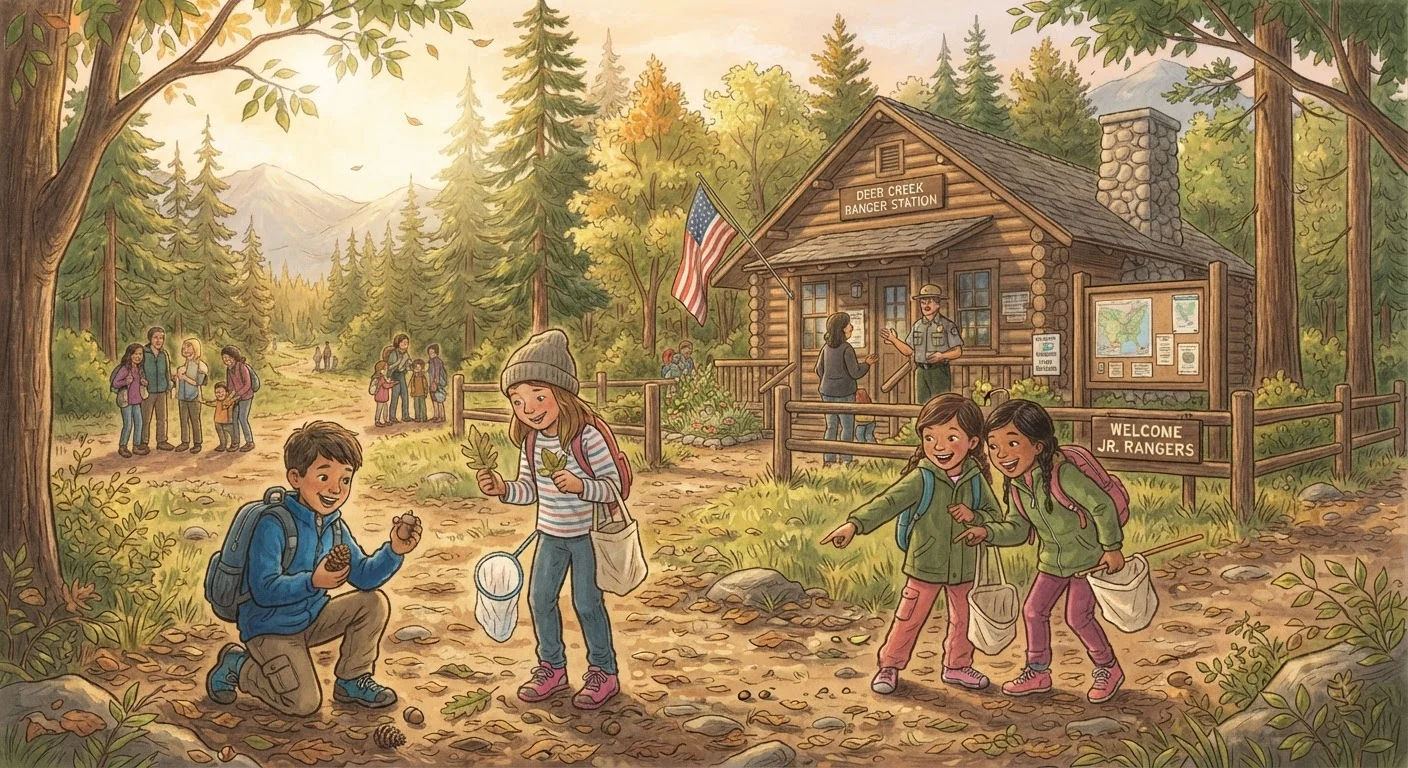
Kids earn a real badge by completing nature tasks, which turns a standard park walk into a mission.
Free museum days and youth admission policies
A large number of science centers, natural history museums, art museums, and children's museums offer free admission on rotating days, typically one weekday per month or every Sunday morning. Some institutions admit children under 12 at no charge year-round. Arrival time matters: going right at opening avoids the mid-morning rush and gives kids access to interactive exhibits before crowds thin the experience.
The Smithsonian Institution's museums in Washington, D.C. charge no admission at all. Many cities have reciprocal membership networks, meaning a membership to one participating science center may grant free or discounted access to affiliated museums in other cities. Call ahead or check the Association of Children's Museums website to see whether the museums on your destination list participate.
A reciprocal museum membership from your home city can unlock free entry to affiliated venues on the road.
Public beaches, lakes, and splash pads
Public beaches and swimming areas managed by county or municipal parks departments are often free or charge only a small parking fee. Many mid-size cities have installed free splash pads in public parks, which are particularly useful for families traveling with toddlers who are not yet strong swimmers. These areas tend to have restrooms, shade, and open grassy space, making them practical half-day stops.
Freshwater lakes and reservoir beaches managed by Army Corps of Engineers facilities charge modest day-use fees and frequently offer far more space per visitor than popular ocean beaches. If you are traveling in warmer months, identifying two or three swimming options near your destination before you go means you always have a free fallback for a hot afternoon.
County-managed lake beaches often charge only a small parking fee and deliver a full afternoon of water play.
Nature scavenger hunts and ranger-led walks
Many state and national parks schedule free ranger-led walks, campfire talks, and wildlife spotting programs, especially during summer months. These are listed on park websites and posted at visitor centers. Beyond organized programs, a simple homemade scavenger hunt adds structure to any outdoor walk: list items like a bird feather, a smooth rock, a seed pod, or a cloud shaped like an animal. Kids who are given a small task on a hike stay engaged longer than those walking without one.
Birdwatching is particularly accessible for families. The Cornell Lab of Ornithology's free Merlin app identifies birds by sound and photo, turning any park or green space into an interactive experience with no equipment purchase required.
A homemade scavenger hunt list costs nothing and stretches a simple trail walk into a two-hour adventure.
Local library cards and cultural programs
Some state library systems allow residents to obtain a temporary guest card when visiting another city in-state, and a handful of library networks extend this across state lines. A library card can unlock more than books: many public libraries partner with local museums, zoos, and performing arts venues to offer free passes on a first-come, first-served basis through their "museum pass" or "culture pass" programs. Check the destination library's website before you travel.
Libraries also run free children's programming, including story hours, STEM workshops, and summer reading events that are open to visiting families. These programs fill an hour or two on a slow travel morning without requiring any planning beyond showing up.
Public library museum pass programs let families borrow free admission tickets to local attractions while on the road.
Farmers markets and free community events
Weekend farmers markets in most mid-size and large American cities cost nothing to walk through. Kids can try small food samples, watch artisan demonstrations, and absorb some of the character of a place in a way no ticketed attraction replicates. Many markets include free live music on Saturday mornings.
Cities and towns regularly schedule free outdoor concerts, festivals, movie nights, and holiday events throughout the summer and fall. A quick search of the destination's parks and recreation department website or local events calendar usually surfaces several options for any given weekend. These events often draw locals rather than tourists, which tends to produce a more genuine experience of the destination. See low-cost weekend activity ideas for a broader look at how these options translate outside of vacation travel.
Free community events draw locals rather than tourists, offering a more genuine experience of any destination.
Building a day around free time
A useful rule of thumb is one paid anchor activity per day, with free activities filling the morning or afternoon on either side. This structure keeps kids from feeling overscheduled and gives parents a clear spending ceiling. Prep a small cooler with drinks and snacks before leaving the accommodation each day; that single habit can redirect a surprising amount of money away from tourist-area food prices.
If your family travels by car, a road trip budget plan can help you identify free roadside stops and state parks along the route that break up drive time at no cost. And if you are still deciding between an all-inclusive resort and building your own itinerary, comparing the real costs of each approach is worth reading before you book.
Front-load your free activities
Schedule free outdoor or cultural activities in the morning when kids have the most energy. Save paid attractions for afternoons, when weather, fatigue, or crowds might otherwise cut a long outdoor day short. This pattern also makes it easier to leave a paid venue without feeling like you have to stay to get your money's worth.